President Trump has brought the world to the edge of the abyss, or so the most commonly heard narrative goes, particularly in Europe. It is beyond any doubt that the American president has been acting and speaking brutally and insultingly, demonstrating great incoherence and a total lack of respect for international law and traditional allies. But shouldn’t we have the courage to look beyond these barren aspects of the present reality and also confront other facets of that reality?
The generally accepted narrative in Europe regarding the war with Iran more or less runs as follows: Pushed by Israeli Prime Minister Benjamin Netanyahu and his extreme right-wing government, American President Donald Trump launched a war on Iran without a well-thought-out strategy or clear objectives. In doing so, Trump not only once again excelled in incoherence, unpredictability, offensive language, and a total lack of respect for his traditional allies—especially the Europeans—but also trampled on the basic principles of international law.
The consequences of this adventure are disastrous. The Iranian theocratic regime remains in place and clearly capable of continued resistance. Traditionally stable Middle Eastern regimes (Saudi Arabia, UAE, Qatar, Dubai, Kuwait) are in turmoil. The oil and gas markets are completely out of balance, threatening to unleash worldwide stagflation. The U.S. prestige and position as the world’s leading power are in jeopardy, as are the dominant role of the dollar and the country’s ability to finance its skyrocketing debt smoothly. Massive volatility and uncertainty, largely due to Trump’s rhetoric and actions, are further destabilizing financial markets and the world economy. In short, Donald Trump has unleashed a conflict that threatens world peace, with little chance of securing clear wins for the American (and Israeli) side, while China emerges as the big winner in all of this.
But is that all there is? As far as Trump’s manners and political approach are concerned, there can be no discussion. The man clearly enjoys offending and brutalizing those who do not dance to his tune (and often those who do). The way deal-making in the Trump playbook often boils down to mere profit-making is more than shameful. The lack of coherence in his statements is also undeniable; however, despite these negative characteristics, is there more to this war than the European narrative summarized above? Let us examine what is really going on and what seem to be the real consequences of this crisis. I will highlight four points.
Decimated Architecture
First, Iran has, over the past decades, been building a mighty military machine of its own and an impressive network throughout the Middle East, clearly intended to gain control over the entire region and its massive natural resources. Central to the Iranian strategy has always been what the theocratic regime in Iran has considered to be an absolute top priority since its birth in 1979: the destruction of the state of Israel. Hezbollah in Lebanon, Hamas in Gaza, and the Houthis in Yemen have formed a powerful political and military infrastructure under the direct control of the Tehran regime, while similar structures have been built in countries like Iraq and Syria. The radically anti-Israel and anti-U.S. strategy – targeting the “little Satan” and the “big Satan” – of this axis has always been part of a rabid anti-Western and anti-democratic playbook. Iran has relentlessly stimulated and supported terrorist violence in the West while trying to build at home a zone of immunity or deterrent architecture that would make its missile and nuclear programs militarily unreachable.
The strategic assets outside of Iran have been badly degraded during the current conflict, as have the Iranian military forces themselves. Most of the senior leadership of these foreign assets has been killed, along with many thousands of their fighters, and their missile and ammunition stocks have been dramatically reduced through intense bombing. The Iranian air force and navy have essentially lost most operational capabilities, and the air defense network barely functions anymore. The Iranian nuclear program has also been fundamentally degraded, although the regime still possesses enriched uranium. American and Israeli bombs and missiles have severely damaged drone factories, missile production sites, steel plants, and petrochemical units. The zone of immunity is gone. Last but not least, Tehran has largely spoiled its relationship with its Gulf neighbors by attacking them during this conflict. It is well-known, though not articulated publicly, that Saudi Arabia and the smaller Gulf states would very much like the U.S. and Israel to “finish the job” on Iran and its proxies.
“The zone of immunity is gone.”
Iran, and certainly its core Islamic Revolutionary Guard Corps (IRGC), pose an existential threat to Israel and are bent on dominating the Middle East. The war against Iran has not eliminated these threats but has drastically reduced the robustness and military power of the Tehran regime and its meticulously built terrorist infrastructure. Certainly, there is overall security lost through this conflict, but much security has also been gained through the military decimation of the Iranian military and its regional allies.
“The war against Iran has not eliminated these threats but has drastically reduced the robustness and military power of the Tehran regime.”
Getting Straight About the Strait
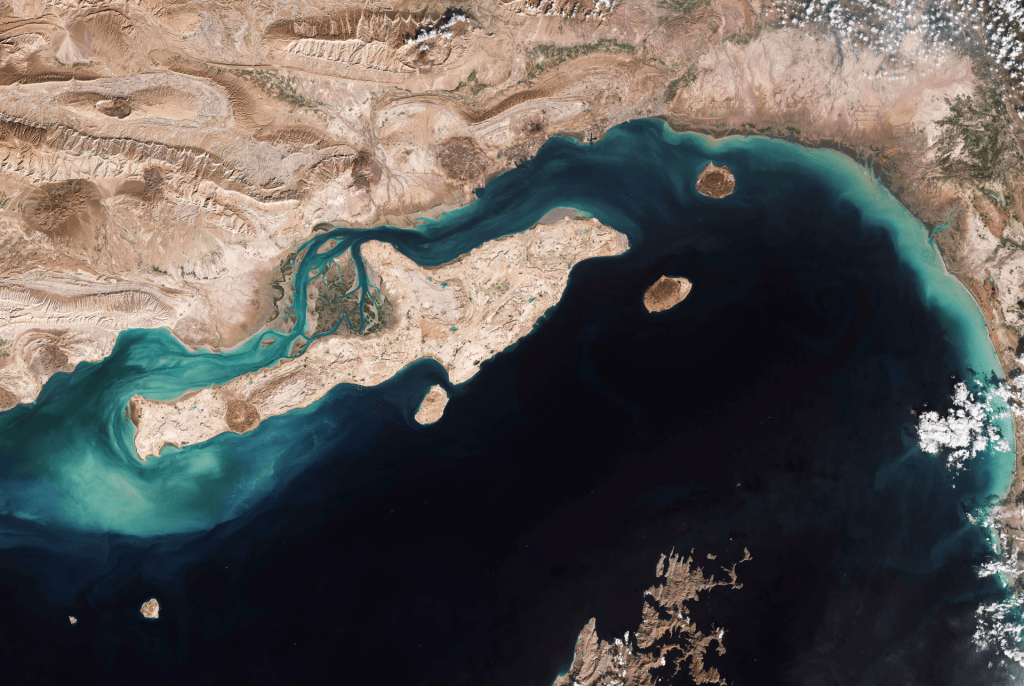
Second, there is the issue of the Strait of Hormuz, the only route from the Gulf to the open sea, which is crucial for the worldwide supply of oil and gas passing through it. This strait is only 54 kilometers wide at its narrowest point, with much smaller navigable channels for inbound and outbound shipping. In 2025, around 25% of the world’s seaborne oil trade transited through the Strait, as well as 20% of the world’s LNG (liquefied natural gas) trade. Iran, Iraq, Kuwait, Qatar, and Bahrain depend on passage through the Strait of Hormuz for the vast majority of their fossil fuel exports.
It has been recognized for a long time that this chokepoint holds significant potential for the theocratic regime in Tehran to be weaponized if and when that regime deems it necessary. It was only a matter of time before this occurred. It is now clear to everyone in the responsible international community that this strategic threat needs to be addressed. Regardless of the outcome of peace talks between Iran and the U.S., it is evident that the world will not accept a return to the status quo ante regarding passage through the Strait of Hormuz.
Alternatives to passage through the Strait of Hormuz will be intensely sought. Currently, there are three oil pipelines that can serve as alternatives to the Hormuz passage. The most important is Saudi Arabia’s East-West Pipeline to the Yanbu port on the Red Sea, which has a capacity to transport up to 7 million barrels of crude per day. At the moment, approximately 3 million barrels per day are flowing through this pipeline. Thus, much more can be handled, and plans to further increase capacity are already being discussed. However, there is a risk associated with this route, as the crude transported via this pipeline must pass through the Strait of Bab al-Mandeb, which connects the Red Sea to the Gulf of Aden and then the Indian Ocean. The Houthis in Yemen potentially threaten this passage.
Secondly, there is the UAE’s Abu Dhabi Crude Oil Pipeline, often referred to as the Habshan-Fujairah Pipeline, which runs from Abu Dhabi to the Gulf of Oman. The capacity of this pipeline is estimated to be around 1.5 million barrels per day, which is largely utilized at the moment. The third pipeline is the Iraq-Turkey Crude Oil Pipeline, linking Iraqi oil fields to the Mediterranean coast of Turkey. This pipeline also has a capacity of 1.5 million barrels per day, which is only minimally used these days. For these two pipelines, possibilities for increasing capacity are also being studied. Several options for new pipeline networks out of the Gulf states are currently under intense scrutiny.
More specifically, for Europe, crude oil from African sources like Nigeria, Angola, Algeria, and Libya offers alternatives to the volumes passing through the Strait of Hormuz. However, the potential of these countries to increase production is limited, not least because of significant internal instability, most notably in quasi-anarchic Libya. Today, Europe sources nearly half of its crude needs from Norway, the United States, and Kazakhstan, but here too, the immediate availability of spare capacity is limited. Additionally, for LNG, there are alternatives to Middle Eastern imports (especially from Qatar), with the US, Australia, Norway, and some African countries being the leading candidates.
Evidently, the present turmoil in and around the Strait of Hormuz is disrupting the worldwide oil and gas industries, particularly in Europe and Asia. Given the nature and broader objectives of the theocratic regime, this was an accident waiting to happen. Everyone now realizes that this new situation will need to be addressed in a structural way. As indicated, it is already quite clear along which lines new developments and investments will take place in order “to deal with the Strait.” While many commentators and analysts are evoking nightmare scenarios regarding the Strait of Hormuz, the present crisis might well produce just the opposite: a structural reduction in the importance of this passage, which can easily be weaponized and thus hold the world economy hostage.
“While many commentators and analysts are evoking nightmare scenarios regarding the Strait of Hormuz, the present crisis might well produce just the opposite.”
The Kyiv Connection
Third, the present conflict in the Middle East might also lead to a fundamental shift in the parameters determining the situation in Ukraine. Confronted with a Russian army much larger than its own in terms of personnel and traditional military hardware, the Ukrainian armed forces were obligated from the beginning to find compensation for these significant comparative disadvantages through technological advancements. They certainly succeeded in doing so in the realm of drones and anti-missile technology.
Russia leaned heavily on Iranian Shahed drones, but the Ukrainians were able to develop superior drones. Beyond the raw survival instinct, it was the way in which they established their drone infrastructure that gave them the upper hand. The Ukrainians installed direct and lightning-fast communication between the battlefield users of the drones and the mostly smaller drone production units scattered throughout the country. Many people were involved in this endeavor, including the now-famous “mothers in garages” working on drone production. The continuous input of battlefield experience led to constant improvements and innovations.
Ukrainian drones became increasingly successful in the war and in attacking targets deep inside Russia. A recent concrete example demonstrated the breathtaking progress the Ukrainians have made in electronic warfare. In mid-April, the Ukrainian army recaptured several Russian positions held in Ukraine using ground robotic systems and drones, with no human infantry involved in this initiative. Even the Americans and Israelis, and most certainly the Russians, were flabbergasted by this extraordinary feat. The Institute for the Study of War concluded that Ukraine gained a clear advantage over its Russian adversary in terms of drone and electronic warfare technology.
These developments in the Ukrainian conflict did not go unnoticed in the Gulf states. As soon as Israel and the U.S. launched their war against Iran and Iran retaliated toward the Gulf states, contacts between Kyiv and the Gulf capitals intensified rapidly, accompanied by a very visible presence of Ukrainian President Zelensky. Ukraine concluded 10-year agreements with Saudi Arabia, Qatar, and the United Arab Emirates aimed at providing these countries with interceptor drone and electronic warfare technology and hardware. Discussions are ongoing with Kuwait, Bahrain, and Oman for the same purpose. Ukraine is well compensated for these services, in both money and oil products.
Another point of interest for the Gulf states is that the Ukrainians have been increasingly successful in destroying Russian oil and gas export infrastructure. Each barrel of oil or cubic meter of gas that cannot be exported by Russia represents potentially extra business opportunities for the Gulf states, given their vast reserves of fossil fuels. For the Ukrainians, the connection established with the Gulf, based on their drone and related expertise, offers a significant opportunity to diversify their support base, both politically and financially.
Are the “winners” really winning?
The fourth point addresses the question of who is winning the war in and around Iran. The Americans and the Israelis can at best claim a partial victory since the theocratic regime in Tehran is still standing (although with shaky knees) and the enriched uranium remains in the regime’s hands. Tehran and its proxies cannot claim victory either, as their military potential has been significantly diminished. Moreover, they have greatly reduced the support they once enjoyed in the wider Middle East.
Is it then correct, as some explicitly argue, to claim that “The Iran War is a Win for China“? Yes and no. Yes, because the U.S. is expending enormous economic and military resources to fight the Iran war, resources they might sorely lack if and when a military conflict around Taiwan arises. Under President Trump, the United States is also losing international prestige and influence, offering China the opportunity to step into the void.
But there is also a quite clear “no” part to the question raised above. First, there is the disappointing performance of Chinese military equipment during the confrontations in Iran. Especially, the Chinese air defense systems were no match for the American and Israeli military forces. Signs of uneasiness and nervousness about this failure were evident in Beijing. Secondly, not much remains of the so-called “axis of resistance.” Venezuela is definitely out, Iran is much weakened, and North Korea has been notably silent in recent months, likely due to the fear that they too might come into “the line of fire.” Additionally, “partner” Viktor Orban is no longer in a position of influence.
Thirdly, despite the U.S.’s loss of reputation and allies, some countries are still eager to make deals with Washington. A notable example is the recent Major Defense Cooperation Partnership signed between the U.S. and Indonesia. While Jakarta has emphasized its neutrality between the U.S. and China, the fact is that this partnership significantly impacts the surveillance of the Strait of Malacca, the connection between the Indian Ocean and the South China Sea. The Strait of Malacca lies between Malaysia and Indonesia, with Singapore at its entrance. There is also a substantial American presence in Singapore.
Eighty percent of China’s oil imports and huge volumes of Chinese exports pass through the narrow Strait of Malacca. Twenty years ago, then Chinese President Hu Jintao publicly spoke about the “Malacca dilemma” for his country. This dilemma is still very relevant today because of a crucial difference between China and the United States. China remains highly dependent on imports for its energy requirements, while the U.S. has been self-sustaining in terms of fossil fuels and energy needs since 2019. Some differences are more significant than others, especially in the current geopolitical uncertainty and turmoil.

