By Johan Van Overtveldt & Dieter Van Esbroeck
Europe is reeling from a succession of drastic shocks. In geopolitics, we have suffered too long from frivolous naivety, and in economics, we have ignored the longer-term consequences of the relentless drive in most EU countries toward more intense redistribution of income and wealth. The required changes in mentality and policies are of a Herculean nature.
The first quarter of the 21st century has certainly been full of unpleasant surprises on the European continent. It started with the (rather benign) aftermath of the bursting of the dot-com bubble, followed by the 2008 Great Financial Crisis, the euro area debt crisis that dragged on from the end of 2009 until 2015, the Covid-19 pandemic that overwhelmed the entire world in 2020-21, the full-scale military invasion of Ukraine by Putin’s Russia in February 2022, and early in April 2025, American President Donald Trump started a trade war against the rest of the world that substantially raised volatility and uncertainty throughout the global economy.
The second quarter of this century began on the same track with a fierce dose of “shock and awe” when, a few weeks ago, Donald Trump and Israeli Prime Minister Benjamin Netanyahu greenlighted a massive military attack on Iran, quickly spreading to the entire Gulf region and Lebanon. The war on Iran has already resulted in major adverse consequences for energy markets and the economy in general, with more headwinds in the making. Adding to all these shocks is the continuous pressure on European societies emanating from an aging population and the manifold economic, social, and ethical uncertainties surrounding the lightning-fast developments in the field of Artificial Intelligence (AI). A broader picture emerges in which things are looking tougher than ever for governments and policymakers. Kicking the can down the road and hoping for the best to fall from the skies is no longer an option. The political world at all levels must come up with real solutions to the manifold problems and difficulties European societies are facing.
“Kicking the can down the road and hoping for the best to fall from the skies is no longer an option.”
Comatose nirvana
What complicates the Herculean task of present-day policymakers is that, for an adequate approach to the huge challenges we face, they must confront systemic biases in mentality and approach that have characterized European policymaking over the past decades. These biases have been present in both our geopolitical and economic policies and have diverted attention from what have now become major obstacles to effective policymaking.
With respect to geopolitics, most European politicians—not only the present generation but also past ones—have suffered from what I label as frivolous naivety. We relied on the eternal availability of the American nuclear and military umbrella to ensure our safety and security. Moreover, we implicitly assumed that we would have differences of opinion with our North American ally, but that these discussions would never fundamentally derail the transatlantic relationship. We also assumed that, given our special relationship with the USA, we could develop impactful soft power diplomacy to address global developments. If needed, so the implicit reasoning went, we could always count on the Americans to deliver the heavy lifting and brute force, which we then often criticized or condemned in a strange twist of reasoning.
The focus on soft power diplomacy degenerated over time into endless discussion sessions during which the hunt for avenues around difficult issues, rather than real solutions, took center stage. We increasingly behaved as if talking about issues would inevitably, given enough meeting and discussion time, make problems go away. We lulled ourselves time and again into a comatose nirvana. With the emergence of leaders like Donald Trump, Vladimir Putin, and Xi Jinping, whose “raw power is all that counts” approach, European policymakers and citizens faced a rude awakening from that comatose state.
“We lulled ourselves time and again into a comatose nirvana.”
We were largely unprepared for the harsh world of hard power politics, which has thrown soft diplomacy into history’s dustbin. A common characteristic of the approach taken by these three leaders is their pursuit of political fait accompli through the use of force—either the real threat of it or its effective use. After executing their power plays, they look around and implicitly, and sometimes even very explicitly, pose the question, “What are you going to do about it?” Protests emanating from the European sphere are often deemed unworthy of a response by the power-obsessed autocrats of the world.
The second arrival of Donald Trump was the ultimate eye-opener for the European political world and policymaking community. The visceral aversion of the American president toward Europe, and especially the EU, has been one of the few constants in his second term. Time and again, Trump humiliates and ignores Europe, and we can only blame our past frivolous naivety for that. It also makes little sense to assume that after Trump, things will revert to the “normal” of the pre-Trump days. Trump is an extreme exponent of a broader change in attitudes and policy orientation in the United States.
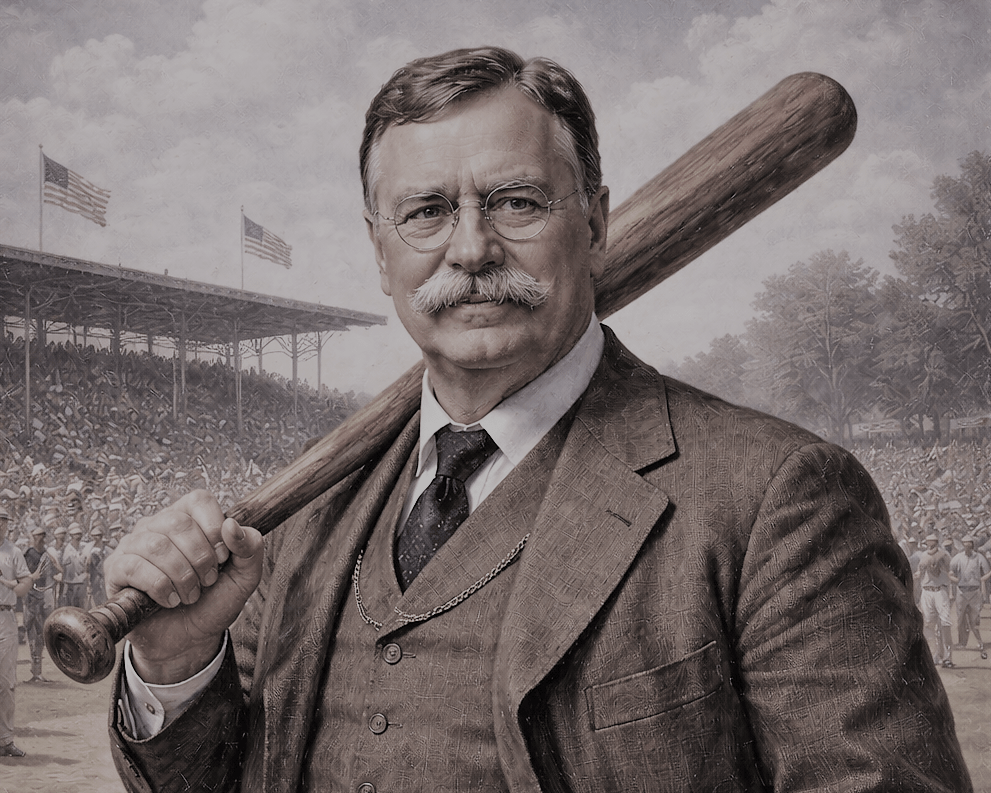
To shed our frivolous naivety of the past and regain substantive geopolitical impact, we should remember the adage of another American president. Theodore Roosevelt, who served as US president from 1901 to 1909, often repeated: “Speak softly and carry a big stick; you will go far.” The three dominant present-day world leaders—Donald Trump, Xi Jinping, and Vladimir Putin—plainly ignore you if you don’t carry a big stick, meaning that you must have meaningful instruments to back up diplomacy with raw power. Having largely neglected our military and security needs for decades, Europeans face a rather helpless predicament in a hostile world. Regaining a big stick will require immense political courage to undertake the structural reforms of regulatory, tax, and labor policies, as well as hundreds of billions of euros in investment to recreate the military and security capabilities that the new world “order” imposes on us. That is, if we want to preserve the basic values and norms of our democratic societies.
“If you don’t carry a big stick, today’s world leaders will simply ignore you.”
Unintended consequences
In the sphere of economic policies, one of the main biases in most European countries has been the neglect of the consequences of a constant drive for further redistribution of income and wealth. We have exchanged the old Enlightenment-born emphasis on equality of opportunity for an emphasis on equality of income and wealth. The economic consequences of this relentless push for reinforced redistribution have consistently been ignored.
Redistribution of income and wealth depends fundamentally on two factors: the characteristics of the tax system and the amount of government expenditures. Government expenditures within the EU rose from 30.7% of GDP in 1970 to 49.7% of GDP in 2024. Public investment and expenditures for defense and security have tended to decline as a percentage of GDP, while social expenditures, largely focused on redistribution, have skyrocketed. Public social spending increased for countries like Germany, France, and Belgium from less than 20% of GDP to around 30% of GDP.
Simultaneously, and linked to the significant relative increase in redistributive expenditures, tax burdens have increased substantially within EU member states. As basic economic textbooks teach, it is on the shoulders of the most immobile factor of production that most of the overall tax burden inevitably falls. This means labor. Belgium leads the EU in terms of the tax burden on labor, with a rate of 52.6%, followed by Germany and France at 47.9% and 47.2%, respectively. Belgium also has extreme progressivity in its personal income tax, with the top 1% of earners paying 11.5% of total income tax receipts, the top 10% paying 46%, and the top 20% paying 65%. Nevertheless, some Belgian politicians cannot utter three sentences without at least once referring to the need for the “strongest shoulders” (“sterkste schouders” in Dutch) to contribute more than they currently do to the government apparatus.
Of course, redistribution of income and wealth is necessary due to fairness considerations and because some members of society need the help of others in their lives. However, we have stretched this argument very far and systematically ignored the unintended consequences of a policy emphasis on redistribution through continuously rising tax burdens with a relentless focus on increased progressivity. The result has been a gradual but outspoken erosion of incentives to work, innovate, and engage in entrepreneurship, structurally handicapping productivity and economic growth. Another consequence of the intense drive toward redistribution has been a weakening among citizens of self-reliance and a sense of personal responsibility for the unpleasant vicissitudes of life. We rejected the view that the poor might be better off with a smaller piece of a bigger pie. We focused on a bigger share of the pie, regardless of how the policies pursued affected the growth (or lack thereof) of the pie.
It can, of course, be a democratically supported choice within societies to push for ever more redistributive policies, but then that eventual majority should accept the consequences of that choice, which does not seem to be the case. Redistributive policies increasingly weigh on the growth potential of economies, and more growth is a crucial ingredient of the policy mix needed, first, to allow Europe to become relevant again in the international geopolitical struggles of today, and second, to ensure that we can safeguard our quality of life for future generations.
“We focused on a bigger share of the pie, regardless of how our policies affected the size of the pie itself.”

