By Johan Van Overtveldt & Dieter Van Esbroeck
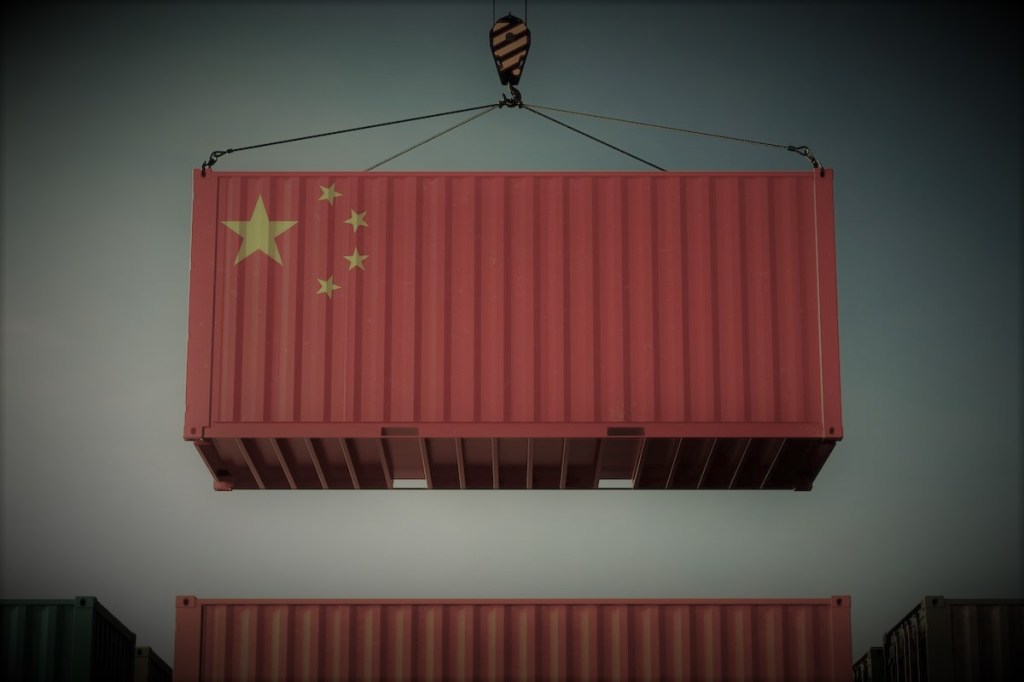
Massive state subsidies, internal market protectionism, persistent currency undervaluation, and continuous intellectual property theft form the Unholy Quartet of China’s stubborn anti-free trade policy. Europe must stop being naive and soft, and instead counter this destructive behavior. A 10% import tariff on all goods from China might be a good start, not least for the revenue it provides.
“We can bring down energy prices, invest and innovate more, reform our economies. But all this is undermined if our companies do not compete on a level playing field,” European Commission President Ursula von der Leyen argued a few weeks ago during her State of the Union speech in the European Parliament in Strasbourg. Von der Leyen went on to stress that this huge problem for the European economy is almost exclusively due to China’s economic and industrial strategy. In an earlier blog, we argued that Europe’s sky-high energy prices are a decisive force behind Europe’s loss of competitiveness and backsliding in productivity, but the fundamentally unfair competition rolled out by Chinese exporters is an even greater threat to our economic, social, and political well-being.
“We can bring down energy prices, invest and innovate more, reform our economies. But all this is undermined if our companies do not compete on a level playing field.”
Despite rising opposition to free trade as a major guidepost for economic policymaking—not least because of American President Donald Trump’s abysmal rants and related policy actions against it—free trade retains, even in the 21st century, all the potential as a major driver of economic and social progress, if, and only if, those involved in free trade transactions play by the rules. Despite all the promises made when China joined the WTO (World Trade Organization) in 2001, the Beijing regime is manifestly not playing by the rules of free trade. On the contrary, there is a mountain of evidence that China intentionally ignored the basic rules of free trade association in order to super-charge its economic and industrial development and to translate this economic power base into a geopolitical strategy aimed at dominance. Already in 2020, China’s strongman Xi Jinping stressed that China must do everything “to tighten international production chains’ dependence on China.” Not reliance on but dependence on: the choice of words reveals much about the actual mindset in Beijing.
The Unholy Quartet
Whereas Chinese competition is an issue for most countries in the world, for the EU it has become a very pressing one. Last year, the EU faced a 360 billion euro trade deficit with China: 571 billion in exports from China into the EU against 200 billion in exports from the EU into China. For this year, a trade deficit of at least 400 billion euro is expected. Entire sectors of the European economy are in danger of being wiped out by this tsunami of Chinese products (automotive, transport, machine building, renewable energy equipment, batteries, …). Europe can no longer accept this situation, and decisive counter-action is most justified. Indeed, in at least four ways, China’s competitiveness is based on elements that are flatly in contradiction with what needs to be respected to have the so-called “level playing field” in free trade relations.
“Europe can no longer accept this situation, and decisive counter-action is most justified.”
First, there are the massive Chinese government subsidies. An in-depth, firm-level OECD analysis on subsidies recently concluded that “firms in China continued to receive significantly higher support than their competitors elsewhere. Between 2005 and 2024, Chinese firms received, on average, three to eight times more government support than firms in OECD countries. Around 22% of market share gains by firms that expanded over the past two decades can be linked to subsidies they received, rising to 60% for Chinese firms.” The major instruments through which these subsidies are delivered are below-market-rate financing, direct government grants, and tax concessions.
The second element of the unfair competition quartet is the way in which China seals off its internal market from foreign competition. Several mechanisms are systematically used for this purpose. Public procurement rules are such that state-owned Chinese enterprises are at a major advantage. Technical requirements are always carefully tailored to favor domestic producers. Foreign competitors are most of the time subject to heavy compliance hurdles, usually under the pretext of national security.
A third anti-competitive weapon constantly used by the Chinese authorities is the persistent undervaluation of the renminbi, the Chinese currency. An undervalued currency is, of course, a substantial stimulus for exporters and a major hindrance for importers. The IMF estimates the renminbi undervaluation to be in the order of 16% to 21%. According to the purchasing power-based Big Mac Index regularly calculated by The Economist, the renminbi undervaluation is about double the IMF number, at 37%. Brad Setser of the Council on Foreign Relations estimates the renminbi’s undervaluation at 30 to 35%. This renminbi undervaluation is the result of a systematic policy of interventions by the PBOC (People’s Bank of China) and by state-owned commercial banks.
Fourth, there is the ongoing intellectual property theft, in which China has become most ingenious and efficient. Former US National Security Agency Director Keith Alexander described China’s theft of intellectual property as “the greatest transfer of wealth in history.” According to former CIA Chief of Counterintelligence James Olson, “there are spies, and then there are Chinese spies. China is in a class by itself in terms of its espionage, covert action, and cyber capabilities.” Congressional research puts the cost for the American economy of intellectual theft by Chinese entities at between $225 billion and $600 billion annually. Several intelligence and security estimates even come up with numbers in excess of $1 trillion.
Europe’s Dangerous Naivety
European companies are also under constant threat from Chinese hacking, as recent warnings by British, Dutch, and Belgian intelligence have underlined. It is in this context truly astounding that the Spanish government awarded the Chinese company Huawei the contract for storing and managing judicial wiretap data. Huawei’s involvement is fundamentally endangering intelligence sharing throughout the EU and NATO. The Huawei contract is only one manifestation of the close links the Sanchez government is naively trying to establish with China, a relationship the Chinese will ruthlessly exploit to their sole advantage.
Next to outright theft of intellectual property, Chinese entities have also relied on a less brutal but at least as efficient modus operandi. They buy into a Western company of interest, learn the know-how, transfer the knowledge and technology to China, and then let the company die. A most striking example of this scorched-earth strategy was the way in which Chinese entities took over French and American companies specialized in the processing of rare earth minerals and metals to establish a quasi-monopoly in this processing (see below). The “Chinese treatment” of the Belgian chip manufacturer BelGaN, which went bankrupt in 2024, was also a typical example of this approach.
“They buy into a Western company of interest, learn the know-how, transfer the knowledge and technology to China, and then let the company die.”
Beyond Polite Diplomacy
The EU and its member states have been too naive and complacent for far too long with respect to China’s trade and industrial policy. We need to stimulate innovation and investment to counter the Chinese tsunami, but, as Ursula von der Leyen rightly pointed out, all those efforts will come to naught if we don’t stop the Chinese devastation of our economies. Given the manifold internal economic problems inside China – the official economic growth number of 4.5% to 5% is a Soviet-style hoax, private investment is in free fall, youth unemployment stands at between 30% and 40%, and there is a paralyzing debt overhang – the emphasis on exports to keep the economy humming will only intensify.
There are ongoing discussions on the trade relationship between the EU and China under the leadership of European Commissioner for Trade and Economic Security Maroš Šefčovič and the Chinese Minister for Commerce Wang Wentao, but nobody believes that China is ready for significant concessions. Beijing will try every trick in the book to hold on to the status quo. When the European Council of heads of government meets on October 15/16 to discuss “global macroeconomic imbalances,” it will be up to them to show their teeth—the only language that the regime of Xi Jinping understands. We don’t like this kind of approach, but we’ll have to go beyond polite diplomacy. The world of the 2020s is a world of raw power politics.
First Line of Defence
Why not consider an across-the-board levy of 10% on all imports coming from China into the EU (on top of specific, limited tariffs already in existence)? As argued above, we have every right to take such action given the way the Chinese are consistently and massively abusing the free trade order that benefited them so much in the first place. It can even be argued that an overall import tax of 20% and even 30% is amply justified. 10% should be considered an opening move to make it clear to the Chinese that we mean business.
“The world of the 2020s is a world of raw power politics.”
Of course, China will retaliate, and that will hurt us, for sure. But letting things run as they are now is absolutely certain to hurt us even more. It is often claimed that in their retaliation, Chinese authorities will focus on the rare earth metals and minerals in which they have a powerful market position, but a twofold reaction is in order here. First, substantial rare earth deposits are present in European countries like Germany, Sweden, France, Finland, and Spain. Their development and processing need to be maximally stimulated. Second, considerable reserves are also available and already exploited outside the EU and China. Countries like Guinea, Bolivia, and Indonesia come to mind here.
“Letting things run as they are now is absolutely certain to hurt us even more.”
Of course, much more is needed than a 10% overall tax on Chinese imports to revive competitiveness and productivity in Europe. Improving the internal market, the creation of a real capital markets union, and the restoration of a growth-oriented competition policy are three elements that are obvious in this context at the European level, just like well-thought-out simplification and deregulation. At the level of member states, there is an outspoken need for investment-stimulating tax and regulatory incentives.
Two final remarks. At the current levels of trade, a 10% import tariff on all Chinese imports into the EU would bring in 60 billion euro annually (and counting). Since everybody in the EU is scratching his or her head about what to do with the next multiannual budget (MFF), this 60 billion may also change the perspectives somewhat. It is quite obvious at this point in time that the discussion on the so-called “new own resources” for the EU is not exactly a constructive one. 60 billion extra revenue might oil the decision-making process on the MFF that should focus on an open-minded discussion of existing policies and on sensible initiatives to strengthen competitiveness and productivity. Our proposal also goes together neatly with the recent call from France and Germany for a new EU “systemic reaction tool” that would let Brussels move fast to counter China-driven market distortions. These new powers in terms of trade defense tools pave the way for a systematic response to the Chinese tsunami.

