By Johan Van Overtveldt & Dieter Van Esbroeck
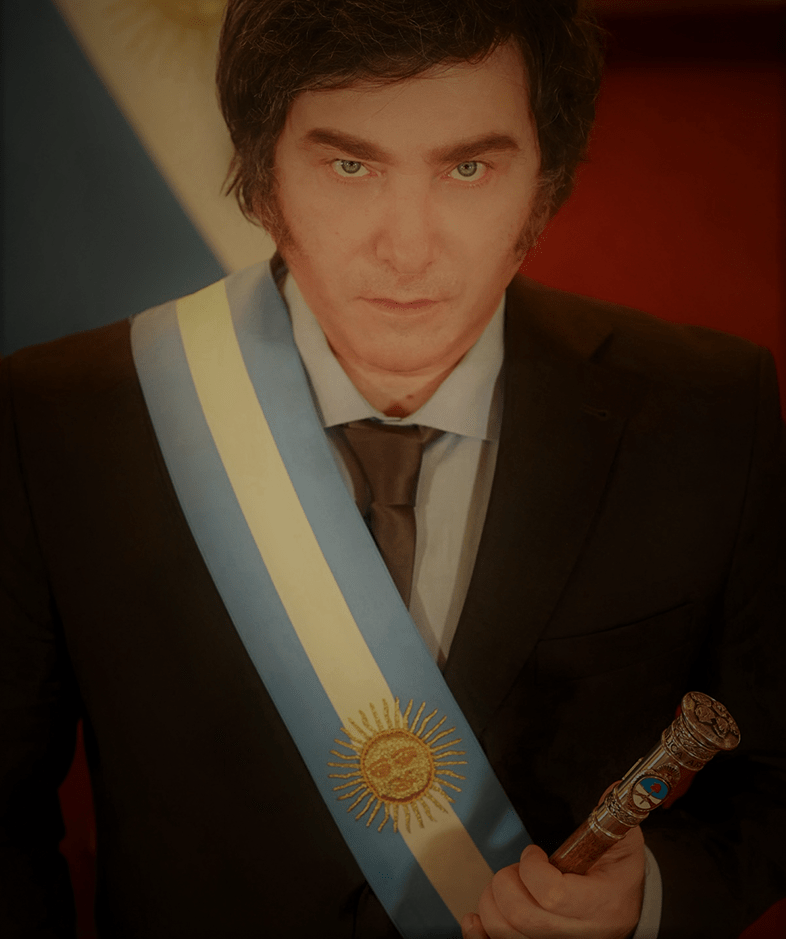
After Peronism dominated Argentine politics for decades, Javier Milei came to power in 2023 with a libertarian reform agenda amid a severe economic crisis. Argentina, once among the world’s richest countries, has struggled for decades with stagnation, inflation, and repeated debt crises. Milei responded with sweeping “shock therapy” reforms, reducing regulation and cutting government.
The turmoil in the Middle East has sent the world on an intense quest for alternative oil and gas sources. Several countries have been considering export restrictions in this new era of scarcity. Not in Argentina, where the largest auction in a decade was announced in Vaca Muerta, a massive shale oil and gas formation in the Neuquén Basin in Northern Patagonia. It is the country’s most significant unconventional hydrocarbon extraction project. Argentina’s largest energy company, YPF, has also announced a $25 billion oil export project. At the same time, while many parts of the world struggle with rising housing costs, the rental market in Argentina is flourishing. And while Europe treads very carefully with any potential opening of agricultural trade in its recently concluded trade agreements, Argentina has slashed taxes and trade restrictions, leading to a record harvest. On top of these sectoral reforms, Argentina’s Labor Modernization Act has just been published, with the aim of dismantling a system designed to protect trade unions, not workers. What is going on in Argentina?
“Argentina, once among the world’s richest countries, has struggled for decades with stagnation, inflation, and repeated debt crises.”
Peronism has been the main political force in Argentina for the past 70 years, following the reign of Juan and Evita Perón. In December 2023, Javier Milei rose to power with a different message, as the leader of the libertarian party ‘Avanza Libertad’. He inherited an economy in a dire state, with an enormous inflation rate of 211%, almost zero economic growth over the last ten years, and recurring problems with public finances, marked by repeated debt crises and IMF rescues. Milei’s remedy consists of cutting government programs, taxation, public administration, and regulations, enacting privatizations, and other structural reforms. The image of the chainsaw with which he takes up the battle against government privileges has reverberated around the world.
“Milei’s remedy consists of cutting government programs, taxation, public administration, and regulations, enacting privatizations, and other structural reforms.”
A Short Political History of Argentina
The recent economic state of Argentina would almost make us forget that at the beginning of the 20th century, Argentina was one of the richest countries in the world. In 1910, the country had the eighth highest GDP per capita globally, positioned between Belgium and the Netherlands, and richer than, for instance, France and Germany. Argentina accounted for half of Latin America’s gross product. Argentinians had experienced more than fifty years of liberal government by that time, first with oligarchic and later with democratic tendencies. The most famous export sector was agriculture, whereby Argentina earned a nickname as ‘el granero del mundo’ (‘the world’s barn’).
The economy stopped growing, so that just after the Second World War, prosperity was still at approximately the same level as at the beginning of the century. That was the time that Juan Perón rose to power. He made his career in the military and gained popularity when he became Minister of Labor, then Minister of War, and Vice President before getting arrested for political reasons. He became President mostly with the support of workers to pursue an agenda of social justice, corporatism, and nationalism.
Juan’s wife Eva (or often called Evita) Perón became even more popular in her short time as first lady. Born into poverty, she gained some fame as a film actress and radio presenter before meeting Juan Perón. She led the Ministries of Labor and Health, established and directed the charitable Eva Perón Foundation, advocated for women’s suffrage in Argentina, and created and led the country’s first large-scale women’s political party, the Female Peronist Party. In 1952, she was given the title ‘Spiritual Leader of the Nation of Argentina’. Shortly thereafter, she died from cancer at the age of 33. After a military coup overthrowing the regime of Juan Perón, her body disappeared and journeyed from place to place. The speculations on the disappearance only contributed to the myth-making around her person.
The economy started growing again after the Second World War, but the growth spurt that Europe and the US experienced in the ‘trentes glorieuses’ did not materialize to the same extent in Argentina. In the last few decades, Argentina became a popular example in macroeconomics textbooks—which is usually not a good sign—as a country repeatedly touching macroeconomic limits. Its precarious public debt situation, laggard growth, and inflation records have made it a regular with the IMF. As people got fed up with the old recipes that did not prove useful in battling Argentina’s economic woes, Javier Milei managed to receive large support for his reform agenda. After gaining 30% in the first round of the 2023 presidential elections, he won the majority against the Peronists with 55.7% of the votes in the second round.
Inspiring Intellectuals
The names of Milei’s five cloned dogs—Conan, Murray, Milton, Robert, and Lucas—give away some of his inspirations. They refer to Conan the Barbarian, Murray Rothbard, Milton Friedman, and Robert Lucas. When Milei created TikTok videos where he heralds ‘afuera’ for the different ministries, one is indeed reminded of a famous interview with Friedman where he answers ‘abolish’ repeatedly when asked what to do with different government agencies. When asked about his inspirations, Milei referred mostly to economists from Argentina or outside with linkages to the Chicago School, the Austrian School of Economics, or with libertarian tendencies.
Closer to home, he is consistently supported by his sister, Karina Milei. She managed his campaign and is involved in every meeting Milei holds and every major decision he makes. Federico Sturzenegger, the minister responsible for deregulation and state reform, is said to be a crucial player in implementing the Milei agenda.
¡Viva la libertad, carajo!
Milei started his reform agenda as president largely in the form of shock therapy, rapidly reducing economic regulations and controls, subsidies, and government employment and spending. The first target of savings was the functioning of the government itself. Soon after being inaugurated, he cut the number of ministries and secretariats by 50%. By the end of 2025, 56,000 civil servants were laid off, many of whom had been hastily recruited by the previous government as loyal party cadres despite strained public finances. This amounted to a government staff reduction of more than 10%. The funding for the office of the Presidency was also cut by 13.3%.
The budget cuts to some of the agencies were very drastic. They have been especially large on infrastructure, science and innovation, education, social development, pensions, healthcare, and federal assistance to the provinces, for some of these extending to more than half of the budget. Not every program was reduced, as some more targeted assistance for large families actually ameliorated compared to the previous government. The Argentine intelligence agency also saw a substantial budgetary increase of 216%. Total government spending decreased by about 30 percent.
One example of deregulation happened in the rental market. In 2020, a new rent regulation was passed in Argentine Congress, for instance, installing price controls that mandated rents to follow price indexes precisely and requiring rents to be paid in pesos rather than dollars. Quickly, the supply of rental units declined drastically, and the initial rents on new leases increased rapidly. Milei repealed the law, allowing prices to form freely again, which directly reversed the effects. Rental unit supply increased by over 170 percent, and real rental prices dropped by 40 percent from October 2023 levels. Milei is also planning to privatize Argentina’s $10-a-night workers’ subsidized hotels that
were established by Juan and Eva Perón.
“Milei repealed the law, allowing prices to form freely again.”
Another example is the agricultural sector, where Milei has reduced taxation and diminished trade restrictions. Argentina has just recorded its largest harvest ever: one hundred and sixty-three million tonnes of grain in the 2025/2026 season, twenty million more than the previous season and twenty-one percent above the previous record set in 2018/2019. An all-time record for maize, wheat, and sunflower seeds, and close to historical highs for soybeans. Argentina is slowly earning back its nickname of ‘el granero del mundo’.
Deregulation in a similar vein was implemented across sectors. According to the Cato Institute, during Milei’s first year in office, he implemented about two deregulations per day. Roughly half of the measures eliminated regulations altogether, while the rest modified existing regulations in a generally market-oriented direction.
State of the Economy
2024 was still a rather difficult year economically, but in 2025 the first signs of improvement started to show. Real economic growth in Argentina stood at 4.4% in 2025, being the highest among the large South American countries (Brazil 2.3%, Colombia 2.6%, Chile 2.3%, and Peru 3.4%). Inflation fell to around 30%, the lowest level since 2018. After declining for five years, real wages have started to recover in 2024 and through 2025. The budget has recorded its first surpluses in 14 years, with a primary surplus of 1.8% in 2024 and 1.4% in 2025, and an overall fiscal surplus of 0.3% and 0.2% respectively. According to a report by the Social Debt Observatory of the Argentine Catholic University (ODSA-UCA), poverty stood at 36.3 percent at the end of the third quarter of 2025, falling 8.4 percentage points from the day Milei took office.
“The budget has recorded its first surpluses in 14 years.”
Extreme poverty also fell to 6.8%. But the going is not easy. As the Financial Times notes, ‘Argentina’s economy shrank 2.6 percent in February [2026] compared to January, the largest monthly contraction since President Javier Milei took office in late 2023, as his inflation-busting economic program weighed on major industries.’
Milei’s international economic policies are also still taking shape. While having promised free international capital markets, he largely kept capital and currency controls to build foreign exchange reserves. One element of the shock therapy consisted of a devaluation of the peso and installing a pegged exchange rate to the dollar that can float freely within a band. Milei has still counted on the help of the IMF for these past years and even received a 20 billion lifeline from the US. He has prided himself on counting Trump and especially Elon Musk as his friends. Receiving loans from the IMF has gone hand in hand with breaking down the capital and currency controls to normalize Argentina’s relation with international capital markets again.
As Milei indicates himself, the full account of reforms that try to stimulate growth can only be made in the longer term. The question also remains whether Argentina will manage to become independent of foreign support and whether Milei proves immune to the siren calls of corruption that plagued several of his predecessors. This would be particularly sensitive as he campaigned on pledges to confront what he calls the “caste” of traditional politicians, whom he has repeatedly referred to as thieves. Recent allegations of corruption against his administration are concerning in that regard. However, the frequent media portrayals of Milei’s radical reforms as driving Argentina toward ruin are so far certainly not borne out by the socio-economic reality.

