Oil and gas prices have shot up in the slipstream of the war in Iran. With food prices also likely to jump, a real inflation problem is on the horizon. ECB policymakers will have to make some tough judgments.
The economic fallout from the war unleashed by Israel and the United States on Iran grows larger as the hostilities drag on. Qatar’s energy minister, Saad al-Kaabi, argued that the war in the Middle East could “bring down the economies of the world.” Amin Nasser, CEO of Saudi Arabian Aramco, echoed Kaabi’s warning about “catastrophic consequences” for the world economy if the war continues. The Economist noted that “a nightmare market scenario is becoming reality.” According to Amrita Sen, director of market intelligence at energy consultant Energy Aspects, “we’re in the midst of one of the biggest supply disruptions in the history of the energy market.” Whether these stern warnings are literally true or need to be nuanced to some degree, the message that significant economic troubles lie ahead if the conflict in and around Iran continues becomes more relevant with each passing day.
“We’re in the midst of one of the biggest supply disruptions in the history of the energy market.”
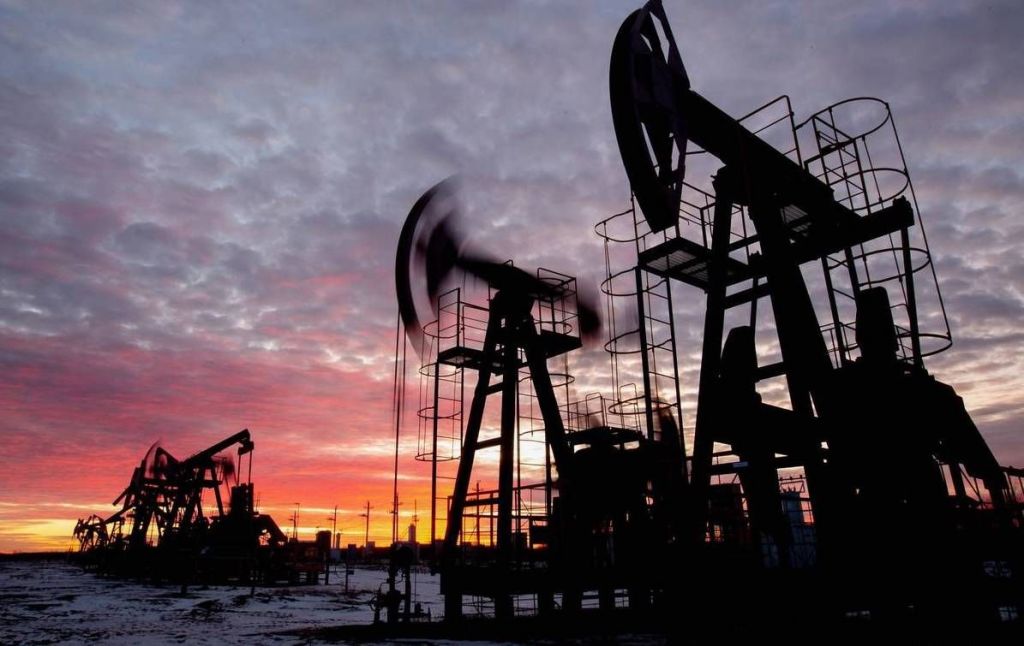
It is certainly true that the overall economic impact of rising oil and gas prices has declined substantially over the past decades. However, it is equally true that the intensity of the shock from these prices due to the Iranian conflict is already impressive. Oil prices have surged from around $70 per barrel to more than $100, fluctuating up and down with each piece of new information, whether accurate or not, that surfaces. The more complicated the passage through the Strait of Hormuz becomes, if possible at all, the more extreme volatility of oil prices will increase à la hausse. Twenty percent of the world’s oil and gas (LNG) passes through this narrow sea lane. European gas prices have also increased by more than 50%, with likely more to come as the conflict rages on.
“Oil prices have surged from around $70 per barrel to more than $100, fluctuating up and down with each piece of new information.”
For both oil and gas, increasingly restricted supply meets basically unchanged demand, hence the price increases, further driven by panicky reactions from oil and gas buyers in Europe and even more so in Asia. China, India, Japan, and South Korea together receive almost 70% of all the crude oil flowing out of the Middle East through the Strait of Hormuz. This “Hormuz” oil represents half of the global crude requirements of these four Asian countries.
It is now obvious that the Trump administration did not fully consider the major consequences of starting the war with Iran for the energy market. The fact that American Strategic Petroleum Reserves were not filled before commencing military operations was astonishing. The trouble with the passage through the Strait of Hormuz was a near certainty. Over the past decades, the Tehran regime has repeatedly threatened to block the Strait if it was attacked.
To compensate for the cut in supplies coming from the Middle East, the Trump administration floated ideas like intervening in the oil futures market, contemplating U.S. government insurance for tankers risking passage through the Strait, urging releases of strategic oil reserves by the G7, and un-sanctioning Russian oil exports. Most of these ideas seem like amateurish improvisation and are unlikely to make a substantial difference. Moreover, un-sanctioning Russian oil risks making Vladimir Putin the big winner of the war against Iran. Given what we’ve seen in the past, it cannot be excluded that Donald Trump would prefer that last idea.
Conversion Lane
The steep price hikes seen so far risk, in the words of Philip Lane, the ECB’s chief economist, bringing about a “sharp drop in output” and a “substantial spike” in inflation. Absolutely correct. Philip Lane was one of the most vocal dovish monetary policymakers when inflation started to rise prior to Putin’s invasion of Ukraine, an event that further accelerated the inflation run-up. When most other central bankers began to recognize the need for more restrictive monetary policies to prevent inflation from spiraling out of control, Lane insisted for months that the inflation run-up was “transitory” and that monetary policy should not become more restrictive. Philip Lane clearly does not want to be on the wrong side of the monetary policy debate for a second time, emphasizing this time around that “this is not an environment where I see an argument in favor of taking a bit of risk on inflation.”
The inflationary impact of explosive rises in oil and gas prices is self-evident. Even if a ceasefire were to occur relatively quickly, there would still be a substantial long-term impact on oil and gas prices. Indeed, for all those engaged in the oil and gas business, a fundamental risk reassessment will be imperative. The business will not be the same after all that has transpired since the start of the military conflict. For example, the reality of what it means if and when the Strait of Hormuz gets blocked cannot be ignored any longer.
But there’s more to the inflation story than just oil and gas prices. Additional inflationary pressure will come from food prices because the fertilizer business is also significantly impacted by the Iranian conflict. The Middle East and, again, the Strait of Hormuz play a crucial role in fertilizer production and trade. Thirty-five percent of global urea exports pass through the Strait. Urea is the most widely used nitrogen fertilizer. Forty-five percent of global sulfur exports also pass through the Strait of Hormuz, with sulfur being a key ingredient in the production of phosphate fertilizers.
Prices for urea have doubled since the start of the war in Iran. With the planting season beginning in the agricultural sector of Europe and the northern hemisphere, these price increases in fertilizers will have a direct impact on food prices in, say, three months or even sooner. Limited availability of fertilizer products risks further exacerbating the upward pressure on food prices. The phenomenon of rising energy and food prices creates a déjà vu feeling because that scenario developed in the slipstream of Putin’s war of aggression against Ukraine.
Thin line
The hiccup to be expected in inflation risks de-anchoring inflationary expectations. In the U.S., this is already clearly visible, with different polls showing that concerns about the cost of living top the agenda of American citizens. Trump’s continuous attacks on Fed policies are contributing significantly to these concerns. In Europe, the situation is less pronounced, but such expectations may change quickly. The recent increase in annualized eurozone inflation from 1.7% in January to 1.9% in February is not good news in this respect, especially since in February, compared to a year earlier, energy prices declined by 3.2%. The reduction of the annualized inflation rate from 2.3% in February 2025 to 1.9% in February 2026 was almost entirely due to… falling energy prices. The phenomenon of falling energy prices will evidently be abruptly reversed in the coming months, unless there’s a sudden and credible ceasefire in and around Iran.
With its main policy interest rate at 2%, this rate will soon turn negative when adjusted for inflation, which means an accommodative stance for monetary policy. Given the mounting inflation pressures, the ECB should then consider increasing its policy rates. Or not? On the one hand, there is the simple fact that, in macroeconomic terms, Europe, and the rest of the world for that matter, is confronted with a severe supply shock in energy markets causing prices to surge. The ECB’s monetary policy cannot, however, cure that shock. President Lagarde and her fellow policymakers within the ECB cannot reopen the Strait of Hormuz, let alone guarantee safe passage through it.
On the other hand, doing nothing means risking a pronounced inflationary outburst that will further destabilize financial markets, which are already showing increased nervousness, not least because of worrisome developments in the private credit markets. “In these markets, the age of innocence has decisively ended,” wrote Andy Haldane, the former chief economist of the Bank of England. How long can this nervousness and anxiety be contained? Inflation, in the end, always leads to economic, social, and political turmoil, as, just to refer to one such episode, the experience of the 1970s and early 1980s has shown.
By raising its policy interest rates, the ECB will dampen demand and reduce price pressures throughout the economy. One never knows beforehand how intense the rise in interest rates must be to sufficiently reduce inflationary pressures. But such restrictive actions by the ECB will inevitably reinforce the recessionary impact that rising energy and food prices will bring about. It was a real tour de force that the ECB could stop the inflation of the early 2020s without causing a recession. It won’t be easy to repeat.
“Inflation, in the end, always leads to economic, social,
and political turmoil.”
Given that price stability is the ECB’s prime mandate, the focus should be on fighting inflation, but the resistance against monetary policy becoming more restrictive – which inevitably means higher interest rates – will be intense, especially from heavily indebted European governments such as those of Italy, France, and Spain. They and most other euro area governments are faced with a precarious budgetary situation. Still struggling to gain control over costs related to demographic aging and expected to ramp up defense spending considerably, they would be very reluctant to see their debt-related interest burden rise substantially.
It is a thin line that ECB policymakers will have to walk in the coming months.
 Johan Van Overtveldt