In our turbulent and chaotic present-day world, it would be most surprising to see 2026 become an “annus mirabilis,” much like 1776 was a quarter of a millennium ago. During 1776, ideas and events transpired that fundamentally changed the world for the better. Two hundred and fifty years after 1776, a new “annus mirabilis” would be a gift from the heavens.
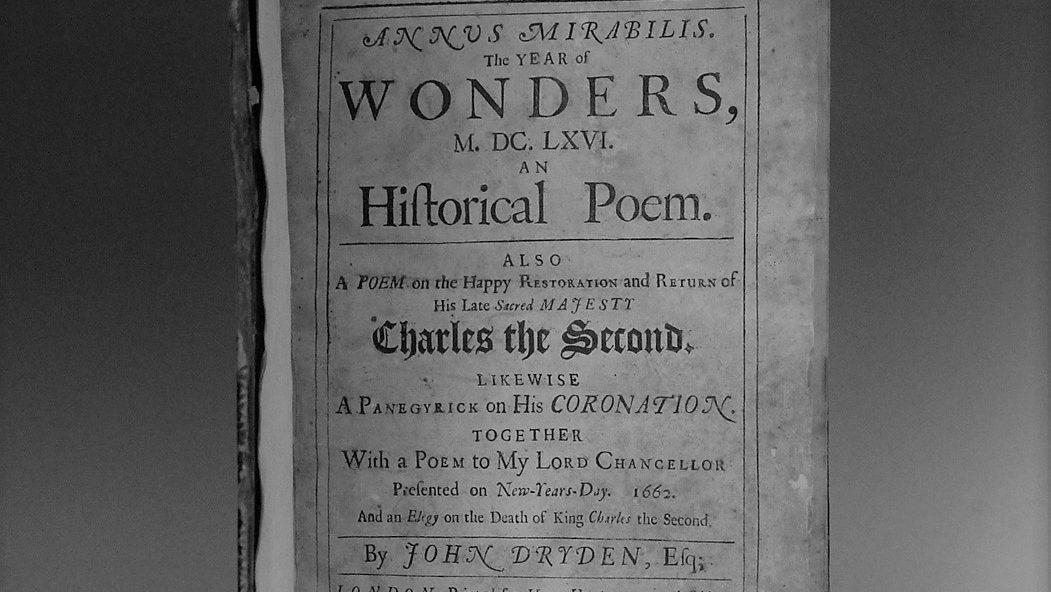
In 1666, the British poet John Dryden published Annus Mirabilis, the Year of Wonders. This poem, consisting of no less than 1200 lines, was actually about the three disasters that characterized 1666 for the British citizens and nation: the plague epidemic, the Great London Fire, and the endless naval battles with the United Netherlands. Dryden, nevertheless, typified 1666 as a year of wonders because all three of these major setbacks could have turned out much worse than they actually did.
Over time, however, the term “annus mirabilis” came to denote not survival amid disaster, but moments of profound historical transformation. Despite Dryden’s rather peculiar definition of 1666 as an annus mirabilis — it reads more like the description of an annus horribilis — the Latin concept generally caught on as the appropriate typification of a year characterized by important breakthroughs and achievements. According to Ronald Coase, the 1991 Nobel laureate in Economics, 1776 was a year in which “ideas were propounded and events transpired which were to shape the modern world” (Coase, 1976). Harvard historian Bernard Bailyn refers to 1776 as a year of extraordinary changes in all spheres of life: in ideology, politics, religion, economics, jurisprudence, and international relations (Bailyn, 1976).
The three features of 1776 that make this year a true annus mirabilis, because they marked a structural break with the past, are:
- The American Declaration of Independence of July 4 of that year emphasizing the equality of all men and so sowing the seeds of modern political democracy
- The presentation in Birmingham to a limited crowd by James Watt of his steam machine, an event that proved to be crucial for the start of the First Industrial Revolution and the subsequent Great Enrichment (McCloskey, 2016).
- The publication of Adam Smith’s opus magnum An Inquiry into the Nature and Causes of the Wealth of Nations, or briefly Wealth of Nations, doing away with protectionist dogmas in economic learning and policy and conceptualizing the many benefits of market- and competition-driven economic development
Clean Break
Although full independence was only achieved in 1783, the American Revolution against British rule resulted in the Declaration of Independence in 1776, a document that directly inspired the Constitution and the Bill of Rights. Together, these three documents constitute the “founding” writings of the United States of America. The international impact of the American Declaration of Independence was almost immediate, inspiring, for example, Francesco de Miranda in his efforts to overthrow the Spanish Empire in South America and several leading figures of the French Revolution (1789), such as the Marquis de Mirabeau. I am very much inclined to agree with philosopher and political scientist Hannah Arendt, who wrote in her book On Revolution that “the sad truth of the matter is that the French Revolution, which ended in disaster, has made world history, while the American Revolution, so triumphantly successful, has remained an event of little more than local importance” (Arendt, 1962).
The drive for independence among North American colonists was greatly stimulated by the publication of Thomas Paine’s fierce pamphlet, Common Sense, in early 1776. Widely read throughout the colonies, it was a passionate plea for independence from the British Empire and for the unalienable rights and equality of men. The content of the American Declaration of Independence was also closely related to the Virginia Declaration of Rights, drafted by George Mason and adopted by the Virginia Convention a month before the Declaration of Independence was finalized. The Virginia Convention also strongly emphasized equality and natural rights, such as liberty and property.
The American Declaration of Independence introduced several ideas and concepts that, while already discussed in some intellectual circles of the era, were politically revolutionary and certainly anathema to the dominant political reality of the anciens régimes in Europe, which was still the politically dominant continent at the time. As Gordon Wood, an eminent scholar of American history, has elaborately argued, the North American colonists desired a clean break from their European past, which they associated with monarchs consolidating power to enslave citizens, confiscate their wealth, and initiate endless wars. “The history of the present King of Great Britain,” as stipulated in the Declaration, “is a history of repeated injuries and usurpations, all having in direct object the establishment of an absolute Tyranny over these States.”
The first central idea or universal principle articulated in the Declaration of Independence was that “all men are created equal, that they are endowed by their Creator with certain unalienable Rights, that among these are Life, Liberty and the pursuit of Happiness.” Equality was further described in terms of equality of opportunity, not in the sense of equality to be achieved through redistribution of income and wealth. It is, of course, a huge anomaly that the founding fathers of the American republic so strongly stressed the equality of men while simultaneously condoning slavery. This anomaly was most personified by Thomas Jefferson, the original drafter of the Declaration, the first Secretary of State, the second vice president, and the third president of the new republic (after George Washington and John Adams). Thomas Jefferson was a lifelong slave owner who at one point “owned” more than 600 enslaved people.
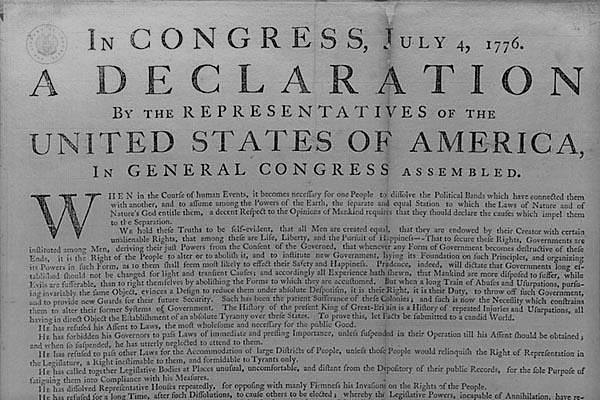
The second basic idea contained in the Declaration of Independence was closely linked to the first: the right of citizens to self-determination through “the pursuit of Happiness.” From this idea stemmed the emphasis on the protection of private property, the rejection of absolutism and monarchy, the right to self-government, and limitations on governmental powers (“Governments … deriving their just powers from the consent of the governed”). Hence, also, the third basic idea: the separation of powers, especially between the State and the Church. The separation of powers among the three branches of government—legislative, executive, and judicial—would be made explicit in the American Constitution of 1787.
Although not explicitly stated in the Declaration of Independence, “no taxation without representation” was a fourth fundamental idea driving the independence movement. One of the colonists’ main grievances was that the British were constantly “imposing Taxes on us without our Consent,” exemplified by the Sugar Act of 1764 and the Stamp Act of 1765. The colonists firmly believed that taxation required explicit representation in Parliament. Finally, the Declaration of Independence also advocated for free trade among the nations of the world. The Founding Fathers were convinced that free trade would foster global peace.
It cannot be overstated how revolutionary these basic ideas in the American Declaration of Independence were for their time. The translation of these ideas into political reality contributed significantly to the subsequent advancement of humanity, first realized in North America and Europe before gradually enriching most of the rest of the world. However, halfway through the third decade of the 21st century, these same fundamental ideas about political democracy are under heavy fire. Primarily influenced by China’s successes, autocratic or even outright dictatorial models of political organization are increasingly challenging democratic political organization. Alongside China, countries like Russia, Iran, North Korea, Venezuela, and even some members of the European Union find themselves in this outright anti-Western democracy camp. In these countries, the personal freedom and rights enshrined in the American Declaration of Independence are substantially curtailed, if they exist at all.
Steaming Transformation
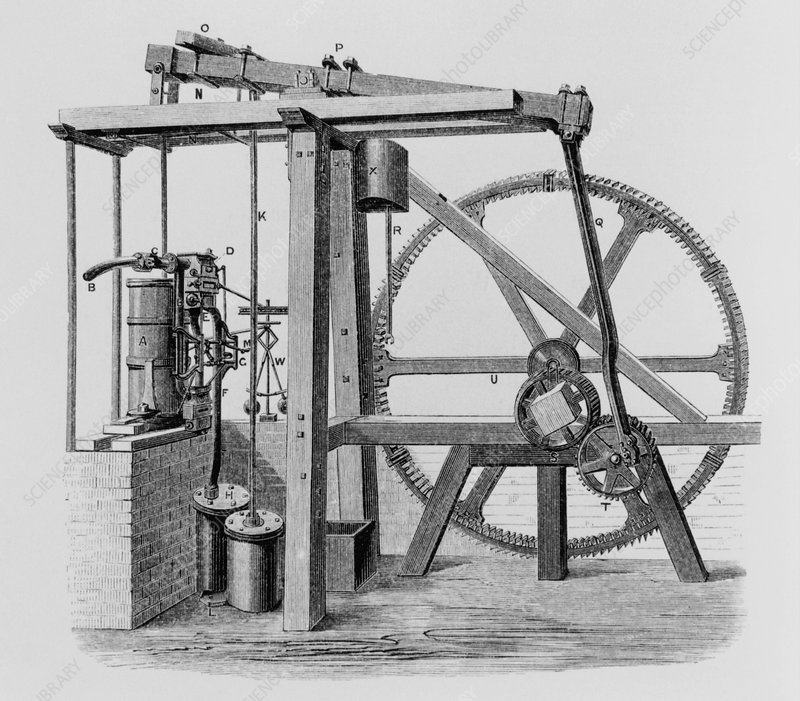
If, in the words of historian Gordon Wood, the American Declaration of Independence was “a brilliant expression of Enlightenment ideals,” then the same description could surely be used for that second transformative 1776 event: the first industrial application of James Watt’s steam power engine (Wood, 2002). From early in his life, Watt was fascinated by technology. James Watt’s attempts to improve existing steam engine designs became much more focused after he teamed up in the early 1770s with Matthew Boulton, a prominent entrepreneur from Birmingham and a man also fascinated by the ideas of the Enlightenment. Boulton and Watt found common ground in their enthusiastic vision for the potential of knowledge advancement and new technological developments.
In March 1776, Watt and Boulton presented the first copy of the Watt steam engine to a select group of intellectuals and business colleagues from the Birmingham area. That day marked the true beginning of the Industrial Revolution. The British coal, steel, and textile industries quickly began to integrate the steam engine into their processes, leading to sustained increases in efficiency and productivity never before seen in human history. Economic historian Gregory Clark is entirely right when he states that “the Industrial Revolution is the key break in world history, the event that defines our lives. No episode is more important” (Clark, 2012).
The steam engine, as a new source of energy, indeed changed the realities of economic life and production for human needs almost overnight. The First Industrial Revolution was decisive in lifting millions of human beings out of a (short) life of poverty, destitution, and violence. Humanity, in terms of real welfare progress, had essentially been stagnant for at least two millennia. Even worse, as MIT economist Peter Temin convincingly argued, the quality of life for ordinary citizens at the height of the Roman Empire was better than for any large group of people living before the Industrial Revolution (Temin, 2013).
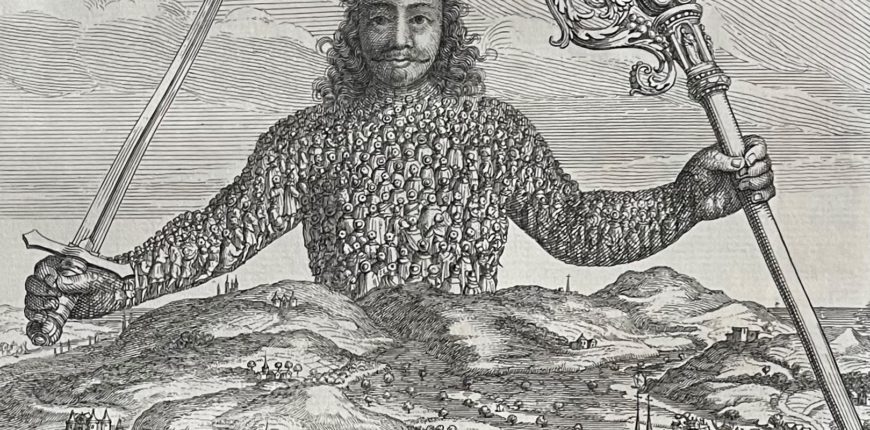
Over the millennia, the evolution of economic activity certainly experienced periods of growth, but also very pronounced declines. Before 1750-1800, income per capita tended to vary across societies and epochs, but no sustained upward trend was discernible (Broadberry & Wallis, 2017). Life expectancy, infant mortality, and caloric intake essentially remained stagnant. The Industrial Revolution formed the basis of modern economic growth, which not only produced a tremendous increase in general welfare but also fostered a society much more advanced in moral and human values (Friedman, 2005). Thomas Hobbes’ claim in his 17th century masterpiece Leviathan (1651) that life is “solitary, poor, nasty, brutish and short” gradually became less relevant in the wake of the Industrial Revolution.
The dynamics unleashed by the Industrial Revolution became a living testament to what could be achieved if human beings truly believed in their potential for self-improvement. Scientific developments had often occurred much earlier in human history. What was truly revolutionary was the marriage between scientific insights and economic initiative, which was, until that point, unique in human history (Mokyr, 2017). Earlier civilizations also made impressive technological discoveries. Ancient China and the Roman Empire stand out as examples in this respect (Mokyr, 1990). One is reminded in this context of the iconic sequence from Monty Python’s movie The Life of Brian, opening with the question: “What did the Romans ever do for us?” and closing with “But apart from better sanitation and medicine and education and irrigation and public health and roads and freshwater systems and baths and public order … what have the Romans done for us?”.
Ancient China also produced important innovations, such as printing, gunpowder, the spinning wheel, papermaking, shipping techniques, and the compass, more than a millennium before the West. There is more than a kernel of truth in historian Donald Cardwell‘s assertion that Archimedes would not have been truly surprised by any of the great inventions fueling the Industrial Revolution (Cardwell, 1994). However, the divergence between Europe and China is nicely described by Will Hutton, principal of Hertford College at the University of Oxford: “Whereas the Chinese would use mathematics and astronomy, for example, to reconceive how historical ceremonial bronze bells or ancient carriages might be built under the patronage of the emperor, Europeans would use the same techniques to develop means to sail the oceans or cast even stronger canons. To dare to know gave an impetus to move restlessly forward. China could not offer the space for those who dared to know to do anything but work within the constraints of what was already around them” (Hutton, 2006).
What was missing in earlier centuries to transform these discoveries into welfare-enhancing and poverty-reducing innovations was a broader context conducive not only to the advancement of knowledge, technical progress, and innovative effort but also to the translation of all this into economic, welfare-enhancing activity. What was most decisive in bringing about this context remains a point of intense debate among historians. Some stress the importance of changing incentives for innovative and entrepreneurial activities; others tend to focus on the emergence of new ideas and the open-mindedness to accept them, mainly through the efforts of those described by historian Joel Mokyr as “cultural entrepreneurs”; and a third group emphasizes the importance of institutional aspects. At this point, it is probably correct to say that a mixture of the arguments from the second and third groups holds the upper hand in this debate.
More specifically, the combination of openness to new ideas and significant institutional changes fueled the acceptance of what the Austrian-American economist Joseph Schumpeter (1883-1940) termed “creative destruction.” Daron Acemoglu and James Robinson, in their comprehensive investigation into the reasons Why Nations Fail, conclude that “the fear of creative destruction is the main reason why there was no sustained increase in living standards between the Neolithic and Industrial revolutions. Technological innovation makes human societies prosperous, but also involves the replacement of the old with the new, and the destruction of economic privileges and political power of certain people … Society needs newcomers to introduce the most radical innovations, and these newcomers and the creative destruction they wreak must often overcome several sources of resistance, including that from powerful rulers and elites” (Acemoglu & Robinson, 2012).

There is a broad consensus that the forces unleashed by the Enlightenment played a crucial, if not decisive, role in fostering an environment conducive to growth, innovation, and entrepreneurship. In Acemoglu and Robinson’s terminology, the Enlightenment produced “newcomers” and created conditions that made “creative destruction” far more acceptable across society. The Enlightenment was a philosophical movement that began in Europe in the 17th century. Following the long period of the “dark” Middle Ages, it emphasized human intellect, reason, liberty, and the scientific method, becoming highly critical of religion, monarchies, and hereditary aristocracy. The Enlightenment period gave us grands savants such as Voltaire, René Descartes, Diderot, John Locke, David Hume, Adam Smith, Immanuel Kant (the German philosopher who succinctly summarized the Enlightenment’s basic spirit with the expression “dare to know”), and Thomas Jefferson (Himmelfarb, 2004). The Enlightenment was pivotal in bringing, in Diderot’s words, les savants and les fabricants.
The Kirkcaldy Sage
It was the famously absentminded Scottish professor of moral philosophy Adam Smith, an eminent member of the Scottish Enlightenment elite, who produced the third watershed event of the remarkable year 1776 with the publication of his opus magnum, Wealth of Nations.
Wealth of Nations is still widely recognized as the manifesto that established economics as an independent branch of the humanities. Smith provided the lens through which most economists still view economics and the world around us. It was hardly an exaggeration when Ronald Coase argued that “the last two hundred years of economics have been little more than a vast ‘mopping up operation’ in which economists have filled the gaps, corrected the errors, and refined the analysis of the Wealth of Nations … Our analysis has certainly become more sophisticated but we display no greater insight into the working of the economic system” (Coase, 1994). Amartya Sen, the 1998 laureate of the Nobel Prize in Economics and ideologically belonging to a quite different pedigree than Coase’s, largely concurs: “I never cease to be impressed – indeed astonished – by the reach of Smith’s ideas across the centuries … There are so many ways in which Smith’s ideas have insights to offer to the world today” (Sen, 2010).
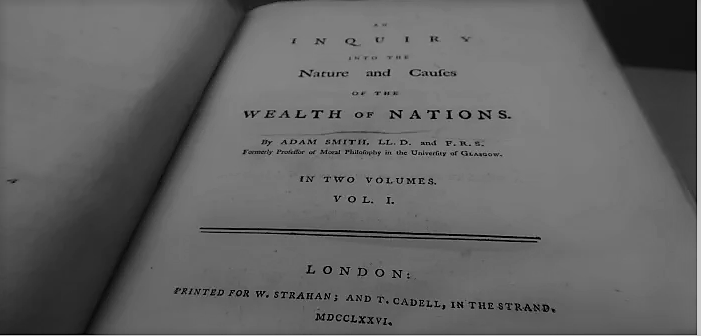
The famous Israeli historian Yuval Noah Harari declared Smith’s magnum opus to be “probably the most important economics manifesto of all time” (Harari, 2015). Alan Greenspan, chairman of the American central bank (the Fed) from 1987 to 2006, also didn’t mince his words when he stated that Wealth of Nations is “one of the great achievements in human intellectual history” (Greenspan, 2005). Scholars Scott Montgomery and Daniel Chirot aptly describe how Adam Smith was far ahead of his time: “Living at a time when wood and animals still powered the globe … (Adam Smith) … composed a book destined to explain a modern world of machines, corporations, and global markets running on oil, and electricity, powering unimaginable industrial, military, and financial might that would alter the human prospect forever” (Montgomery & Chirot, 2015).
Adam Smith’s Wealth of Nations represented a complete break from the then-dominant view that mercantilism, protectionism, and state-led dominance were the preferred ways of organizing economic life. The primary goal of all mercantilist policies was the acquisition of gold and silver, not least to fund wars. Individual welfare was of little concern, to say the least. Smith strongly rebelled against mercantilist theory and practice. Wealth of Nations should first and foremost be read as a brilliant and radical refutation of mercantilism. Smith argued that if human beings are allowed to act according to their self-interest within an environment that limits abuses of greed and power, the wealth of nations and the well-being of their citizens will dramatically increase and go hand in hand. Subsequent human history would abundantly prove Adam Smith’s arguments to be correct.
Adam Smith strongly defended the system of “natural liberty” in which individuals, by pursuing their self-interest, also serve the general interest as if guided by an “invisible hand.” This concept is captured in probably the most famous quote from the book: “It is not from the benevolence of the butcher, the brewer, or the baker, that we expect our dinner, but from their regard of their own interest” (Smith, 1776, as are all other quotes from Smith). The forces driven by the invisible hand lead to an ever-progressing division of labor or specialization, which in turn are the major sources of advancement throughout society. Today, we would argue that increases in productivity are the major source of increased incomes and material well-being, which is exactly what Smith had in mind with his emphasis on the division of labor.
The invisible hand works through the combined forces of supply and demand within competitive markets. Adam Smith was well aware of the dangers of monopolistic behavior to the beneficial functioning of market forces. He succinctly noted that “the monopolists, by keeping the market constantly under-stocked, by never fully supplying the effectual demand, sell their commodities much above the natural price, and raise their emoluments, whether they consist in wages or profits, greatly above their annual rate.” He added that merchants “seldom meet together, even for merriment … but the conversation ends in conspiracy against the public.” Stopping monopolies and “conspiracy against the public” were essential parts of Adam Smith’s overall view of the economy and society.
Adam Smith saw a clear role for government in preventing and fighting monopolies. More generally, and quite contrary to what is often assumed to be Smith’s position, he believed government played an important role in society and even in the economy. The often-made claim that Adam Smith advocated for brutal, unregulated capitalism is complete nonsense. National defense, the judicial system (the rule of law), the establishment of appropriate public institutions, the organization of the educational system, the fair collection of taxes, and investments in public works (highways, bridges, harbors, etc.) were all duties Adam Smith assigned to the authorities. Regulation of the monetary system and the banking business also belonged to the realm of government because Smith recognized the dangers to general well-being from a system flying “upon the Daedalian wings of paper money.” He strongly argued in favor of banks limiting their lending operations to the cash and deposits immediately available to them. In other words, Adam Smith saw no virtue in financial institutions getting themselves into the leveraged positions highly common among 21st-century banks.
Adam Smith strongly advocated that the duties he believed inherently belonged to the state should be carried out with the least interference with the system of natural liberty and competitive market forces. Smith explicitly recognized, for example, the negative impact taxation would have on work effort and economic activity. The 21st-century relevance of these conclusions of Smith’s is undeniable. Concern about poverty and inequality was also very much on Smith’s agenda: “No society can surely be flourishing and happy, of which the far greater part are poor and miserable. It is but equity, besides, that they who feed, clothe, and lodge the whole body of the people, should have such a share of the produce of their own labor as to be themselves tolerably well fed, clothed, and lodged.” He also argued in favor of progressive taxation. The tax contribution of every member of society should be “in proportion to the revenue which they respectively enjoy under the protection of the state.”
The Deeper Current
While it remains highly remarkable that the three epochal events of 1776—the American Declaration of Independence, the first industrial application of James Watt’s steam engine, and the publication of Adam Smith’s Wealth of Nations—all occurred in that specific year, it is also clear that this convergence is not coincidental. The three events I have been focusing on in this blog were the result of deeper currents of mega-change running through Western societies at that time. The Enlightenment played a pivotal role in all this, first and foremost, as argued when discussing the Industrial Revolution, by opening up society to new ideas and by increasing acceptance of the inevitable “creative destruction” that takes place when the economy and society at large make progress. It can be argued that Adam Smith essentially articulated the political economy case for the more general philosophy characteristic of the Enlightenment.
The Enlightenment did not emerge in isolation; it was preceded by the Scientific Revolution, which co-developed alongside it. Most analyses suggest that the Scientific Revolution began in the mid-16th century with Copernicus‘s groundbreaking insights and culminated in the late 17th century with Isaac Newton’s 1687 work, Principia. Additionally, increased mobility during the 18th century contributed to a more flexible and open-minded societal framework. Migration surged both within national borders and internationally, with European emigration to North America being the most notable trend.
The Latin term anus mirabilis (“wonderful year”) aptly describes 1776. In contrast, history also provides examples of anus horibilis (“horrible year”). The effects of the transformative events of 1776 unfolded over decades, even centuries. These three pivotal occurrences laid the groundwork for a world characterized—though not always perfectly—by political democracy, individual rights, free economic initiative, cultural and educational advancement, accountable institutions focused on quality governance, regulatory responsibilities, wealth redistribution, and unprecedented improvements in material well-being and overall welfare. In essence, they marked the beginning of the modern world as we know it today, particularly in the regions that embraced the ideals stemming from the American Declaration of Independence, the Industrial Revolution fueled by Watt’s steam engine, and the revolutionary concepts in Smith’s Wealth of Nations.

Double message
The significance of the annus mirabilis 1776 for our contemporary world, shaped by figures like Donald Trump, Vladimir Putin, and Xi Jinping, is twofold. Firstly, there are evident signs that we are straying from a societal framework rooted in the American Declaration of Independence, the Industrial Revolution driven by the Watt steam engine, and Adam Smith’s Wealth of Nations. Despite its flaws, this framework fostered unprecedented human progress. Departing from it means turning away from further advancements in humanity.
Autocracy and outright dictatorship increasingly threaten political democracy and individual freedoms. Competition-based free market economies are being supplanted by crony capitalism and stringent state intervention. In recent decades, technological advancements have led to the rise of powerful quasi-monopolies, which are explicitly and implicitly shielded by political authorities. These quasi-monopolies mirror the monopolistic behaviors described by Adam Smith: they create immense wealth for a select few, stifle competition, infiltrate political decision-making, and often engage in unethical practices regarding the technologies they develop. Conversely, the annus mirabilis 1776 also conveys a message of hope. The events and ideas of that transformative year illustrate the steps we must take to prevent chaos and despair from further infecting our world and to strengthen political democracy and competition-driven market economies. It is clear that the necessary actions and policies will demand immense political courage and a commitment from citizens to exhibit resilience and a grounded optimism. We have accomplished it before; we can do it again.

