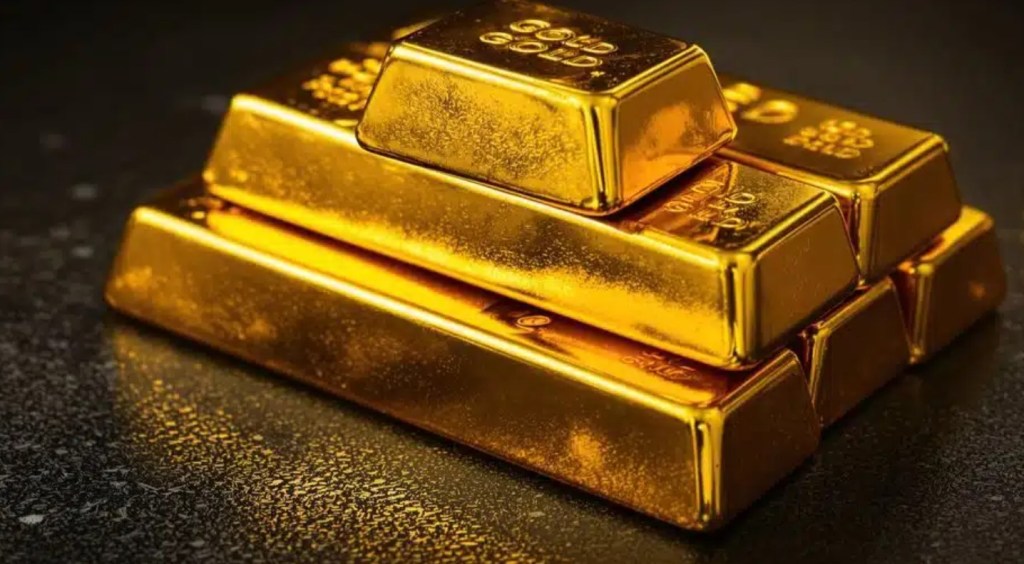
Debasing the currency is the oldest trick in the political toolbox of kick-the-can-down-the-road instruments. Investors’ trust in political and monetary authorities has declined significantly in 2025. The search for hard assets that preserve wealth more effectively has accelerated considerably.
“AI (bubble),” “Trumpmania,” “crypto-craze,” “trade wars,” “EU in disarray,” “stablecoins,” or “Russian frozen assets” are most certainly among the concepts that can be considered serious contenders for the title “theme of the year 2025.” My own choice for this honorary title, however, is the concept of the “debasement trade,” for the simple reason that this phenomenon has gained prominence on the basis of the major underlying problems of Western societies: escalating debt levels, political volatility, mounting uncertainty and fear, significant monetary challenges, and anxiety about sudden outbreaks of major inflation.
The debasement trade refers to an investment strategy whereby financial assets linked to sovereign states are dumped in favor of so-called hard assets. The two major sovereign-linked assets are, of course, currency and bonds (or fixed-income securities). Hard assets share the basic characteristic of having a verifiable, often finite supply. Their price is more a consequence of changes in supply and demand and less the result of political maneuvering.
Historically, debasement was a physical process whereby the sovereign reduced the gold or silver content of the currency. This allowed the issuance of more currency, on the basis of which the sovereign could increase expenditures, most of the time war-related. While the face value of the currency remained unchanged, its intrinsic value declined in line with the reduction in gold or silver content. Traders and citizens, however, inevitably discovered the reduced real value of currency units, leading to price increases and—if the debasement was continued over time—to major inflationary explosions.
This physical debasement technique has existed throughout human history, not least during the Roman Empire, when periodic depreciation of the denarius followed in the slipstream of currency debasement through reductions in its silver content. In sixteenth-century England, King Henry VIII unleashed what came to be known as the Great Debasement by diminishing the silver content of the currency from 90% to 25%. These and many other historical experiences have, over time, given rise to the often-heard claim that society cannot trust political authorities with money creation.
Debt mountains
In modern times, the gold or silver content of currencies is no longer an issue. Since American President Richard Nixon ended the convertibility of the dollar into gold in August 1971, the link between a currency’s value and its gold (or silver) content has disappeared. We now have what is known as fiat money, the creation of which is under the control of central banks—and, often forgotten, also of private financial institutions and their lending policies, which are in turn strongly influenced by regulators’ rules and requirements.
Nowadays, the major issue with respect to confidence in a currency’s value has become the attitude of investors, more specifically their trust in political and monetary authorities to deliver policies that will not lead to the debasement of the currency and of sovereign financial assets.
“Nowadays, the major issue with respect to confidence in a currency’s value has become the attitude of investors”
More specifically, relentlessly escalating debt levels have, in the analysis of investors, increased the risk that expanded monetary accommodation will unavoidably lead to the erosion of the real value of currencies and government debt securities. During the first three quarters of 2025, worldwide debt—private and public combined—increased by $26 trillion to a historic level of $346 trillion (Global Debt Monitor of the Institute of International Finance). This amounts to more than three times global GDP, a debt ratio never seen before in peacetime. Private debt levels also matter in this context, because history shows that in times of crisis large portions of accumulated private debt tend to be socialized and transformed into public debt.
But it is the evolution of public debt that these days keeps many international investors awake at night, not least because of the prospect of continuously rising demography-related costs and substantially higher defense spending in many countries. Investors’ increased nervousness is also evidenced by the substantial rise in long-term interest rates over recent months for major deficit and high-debt countries such as the United States, Japan, France, and Italy.
The small reduction in interest spreads in Europe—i.e. the difference between long-term rates in Germany on the one hand and those in other European countries on the other—is misleading, because this narrowing is entirely due to rising German rates as a result of hefty deficit spending being rolled out in Germany, rather than to declining rates elsewhere.
“The small reduction in interest spreads in Europe is misleading”
Hard truth
Are there today signs that at least parts of the investment community are in the grip of such a loss of trust in political and monetary authorities? Yes, there are—and they can be found in the price changes over the past year of a large number of what we referred to above as “hard assets”:
| Silver | +145% |
| Platinum | +124% |
| Palladium | +90% |
| Gold | +70% |
| Lithium | +67% |
| Tungsten | +50% |
| LME index (*) | +20% |
(*) London Metal Exchange index (43% aluminum, 31% copper, 15% zinc, 8% lead, 2% nickel, 1% tin)
The price changes just indicated are impressive. For gold, for example, the 70% increase in 2025 followed an already substantial rise of 125% in 2024. These outsized movements cannot be linked to demand emanating from the real economy (with the possible exception of lithium), to significant supply-chain disruptions, or to pronounced inflationary pressures. There is more than circumstantial evidence that the spectacular price increases in hard assets are linked to growing anxiety within the investment community.
Rebuilding trust and reversing the recent debasement trade requires courageous and credible action by political and monetary authorities. For political authorities, this essentially means curbing upward expenditure trends, pushing through growth-stimulating structural reforms, and resisting the temptation to seek refuge in tax increases and short-term cosmetic measures. For monetary authorities, it is imperative to stand their ground when it comes to the independence of monetary policy—although, at the end of the day, this independence can only be guaranteed by political authorities.
 Johan Van Overtveldt