
Economics remains a field of study that potentially can tell us a lot about the world, its citizens and the policies we’re in need of. However, the profession lost much credibility in recent times. Rehabilitation is possible on the proviso that economics become simultaneously more context- conscious and less model-blind.
Though already more than twelve years active in Belgian and European politics, the remark “You’re still more an economist than a politician” is still quite often thrown at me. Some intend this expression to be a reproach, maybe even an insult, in the sense of “grow up, man”. Others clearly intend it to be a positive comment translating most of all their discontent with the way in which politics in general have evolved. I’m more and more in doubt about which of these opposing remarks is the more correct one. This doubt is growing not so much because politicians have gotten to be so much better at their job (they have, overall, not; mea culpa) but because economic science has become increasingly dysfunctional. Hence, it becomes almost equally damaging to be labelled as an economist or as a politician.
“You’re still more an economist than a politician”
In this blog I focus on the degradation of economics. As a holder of a PhD in economics I write these words with regret and sadness. I remain absolutely convinced that even in our turbulent 21st century the economist’s toolbox still is a powerful tool for insight, analysis and policy guidance. A little walk through economics’ history is needed in order to understand what went wrong and what can be done about it.
Dismal
In his 1849 essay “Occasional Discourse on the Negro Question” the British historian and essayist Thomas Carlyle described economics as “the dismal science”. Reflecting on the work of the notorious Thomas Malthus (1766-1834) with his prediction of an inevitable cycle of starvation and suffering due to food production not being able to increase in line with population increases, Carlysle concluded that economic science cannot but be defined as “a dreary, desolate and, indeed quite abject and distressing one; what we might call, by way of eminence, the dismal science”.
It is indeed hard to deny that economic analysis regularly led to dismal conclusions and feelings that more often than not have to do with the crucial role played by the concept of scarcity in the economist playbook. Scarcity means that choices need to be made, that one cannot possibly have all that one longs for. It furthermore means also that whatever choices we make there are always costs involved, more specifically opportunity costs.
This last concept refers to the fact that if, for example, you decide to spend today you will have less money available tomorrow. If you choose for more leisure, you are forgoing income. If politicians claim to offer free education, free public transport or free health care to (parts of) the public, they talk nonsense. There is always somebody paying – in the example just given the tax paying public – thus taking away their ability to spend money on something else (or on increased savings). Whether we act as consumer, saver, entrepreneur, investor, bureaucrat or politician we constantly make decisions that implicitly or explicitly imply considerations of opportunity costs.
“Promises of free lunches inevitably lead to disappointment and frustration“
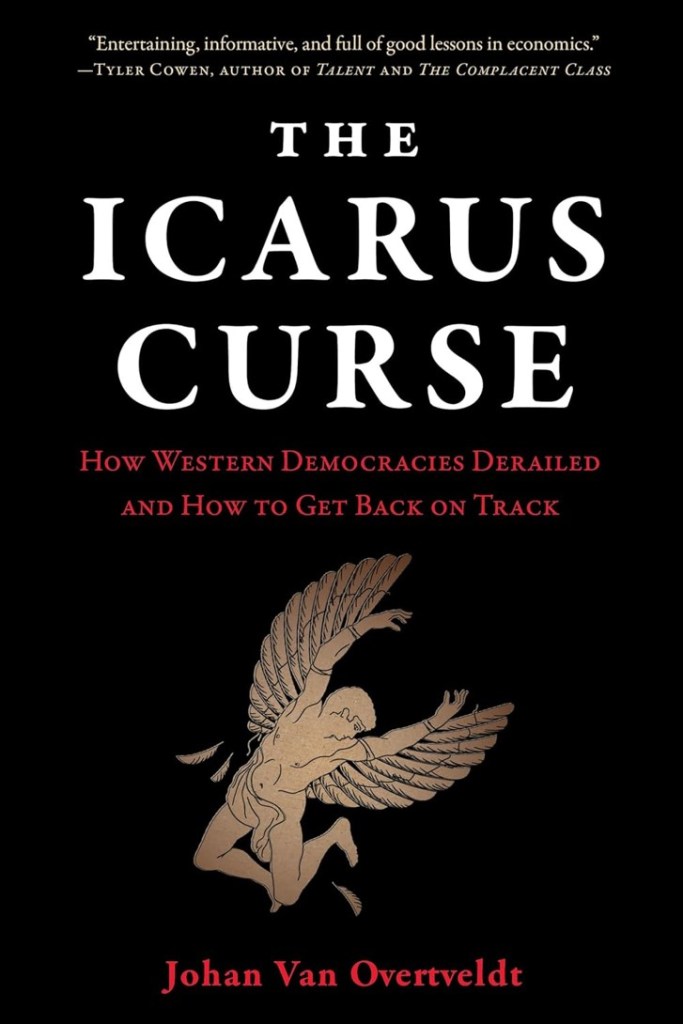
All of our choices involve forgoing other opportunities. The slogan “there’s no such thing as a free lunch” has rightfully become a popular one among economists though in recent times claims to the contrary (“there are free lunches”) have increasingly been made. One of the most striking examples of the free lunch nonsense is the so-called modern monetary theory (MMT) arguing that governments can spend without limitations imposed by the need to raise taxes or borrowing. Stephanie Kelton’s The Deficit Myth (2020) became the bible of the MMT apostles. As of late these MMT folks have tended to be more silent. Unsurprisingly politicians like to throw free lunches around. As I argue in my book The Icarus Curse (2024) these free lunch claims play a crucial role in the degradation of the political class in the mind of the broader public and in the rise of populism and political extremism. Promises of free lunches inevitably lead to disappointment and frustration because after a shorter or longer while the reality of “”there’s no such thing as a free lunch” kicks in without mercy.
“As of late these MMT folks have tended to be more silent“
Dysfunctional
So in a certain sense the reference to economics as “the dismal science” is well deserved. Economists tend to point to limitations and choices that need to be made. There is hence almost an inherent contradiction between the real world-driven economist’s logic and the electorally driven political world. It is, however, not as messengers of the dismal science that economists have tended to go astray; it is much more in the way in which a majority of economists have pushed their machine of inquiry that has led to disappointment.
“An inherent contradiction between the real world-driven economist’s logic and the electorally driven political world“
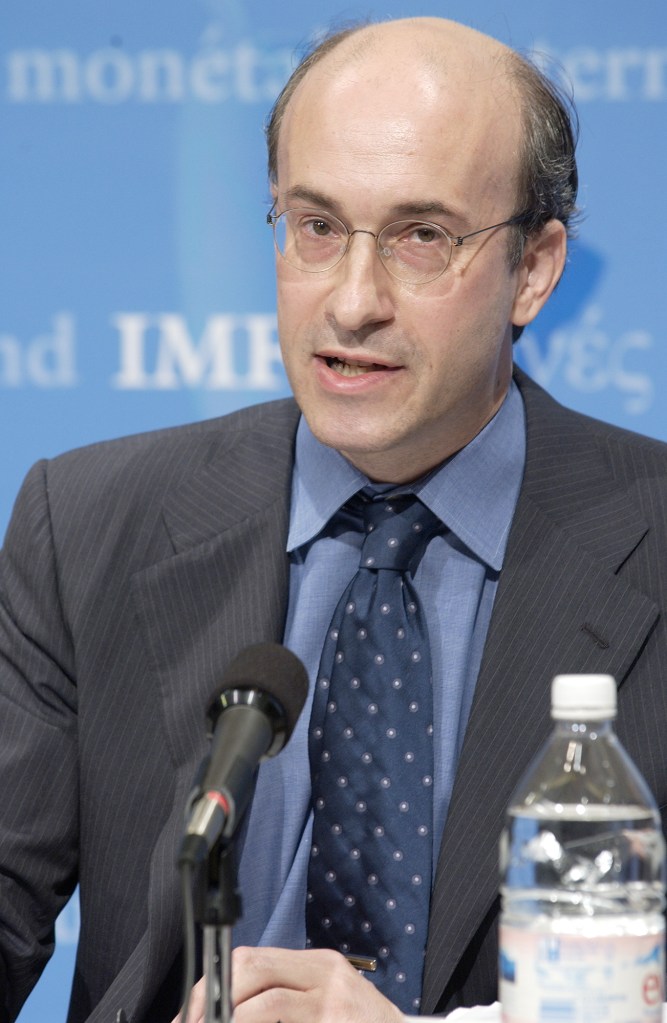
As to where economics got lost Harvard professor and former chief economist of the IMF (International Monetary Fund) Kenneth Rogoff makes some fundamental remarks in his brilliant recent book Our Dollar, Your Problem. “Modern economics”, so Rogoff writes, “has been permeated by ’the end of history’ philosophy whereby economists think that they have it all (mostly) solved but for some refinements. In fact, an important part of the vaunted stability seemingly engineered by central banks over the last half century is an artifact of a period in which trade and financial globalization were rapidly increasing, great power conflict had faded, and populism has been suppressed. Needless to say, all these trends may be reversing”.
Since the Second World War and much inspired by the Keynesian Revolution, model building has increasingly occupied a central place in economic inquiry. Economic models of ever more sophisticated nature were feverishly constructed. Mathematical logic and theoretical elegance more than linkages to the real world became the prime objectives of the industrious model builders. Some of these experts even argued, only half-jokingly, that if discrepancies occurred between what their models predicted and what happened in the real world, then something was really wrong in that real world out there.
With the Great Financial Crisis of 2007-2009 most of these large scale models exploded in the face of their creators. More specifically the so-called DSGE models (“Dynamic Stochastic General Equilibrium”) that for some time became the preferred workhorse of the model builders proved close to useless, not least because most of these models hypothesized the financial and money sector of the economy out of existence. Commendable attempts have been undertaken to improve the quality of these large macroeconomic models but with rather little to show for so far. It was and remains, for example, striking how these macro-models fail to get a real grasp on the inflation process.
Smithian
For economics to regain its rightful place as a most valuable tool of analysis and policy prescription, much more attention needs to be given to the societal context in which economic processes take place. In line with Rogoff’s claim the present world of partial de-globalization, renewed big power competition and struggle and increasing dominance of populist politics is substantially different from the world we know until, say, a decade ago. Such major changes in the overall societal landscape cannot but have a substantial impact on economic analysis.
While the basics of scarcity, opportunity costs, importance of incentives and relevance of price theory remain fully intact, the much changed context needs to be taken into account more explicitly. To some extent it can be argued that we should revisit the economics of Adam Smith (1723-1790), often considered to be the ground layer of modern economics with his opus magnum An Inquiry into the Nature and Causes of the Wealth of Nations (1776). Smith mixes in that timeless book superb basic economic argumentation with a keen eye for the societal context.
The world has changed dramatically since Smith’s Wealth of Nations. Nevertheless the world of economics is much in need of a step back along Smithian lines. Mathematical economics and model building very much have their place in a revitalization of economics but not as alternative truths for the real world outside. For its remontada to be real, economics needs to be much more embedded in the concrete societal context of the 21st century. Positive signs in this direction are discernible. John Cochrane, Luis Garicano and Klaus Masuch write in their new book Crisis Cycle. Challenges, Evolution, and Future of the Euro that “this book is part of an emerging strand of academic literature that uses modern dynamic economic theory to understand historical events and institutions, and it uses historical analysis to learn about theory”.
That is the spirit!
 Johan Van Overtveldt