The daily stream of odd and counterproductive sounds and actions coming out of Washington has many rather dramatic side effects. One of those side effects is that we are losing sight of what has been and still very much is the main disruptor of the open trade order, which is still very much present. There is an urgent need to refocus on China’s hostile strategy towards the West.
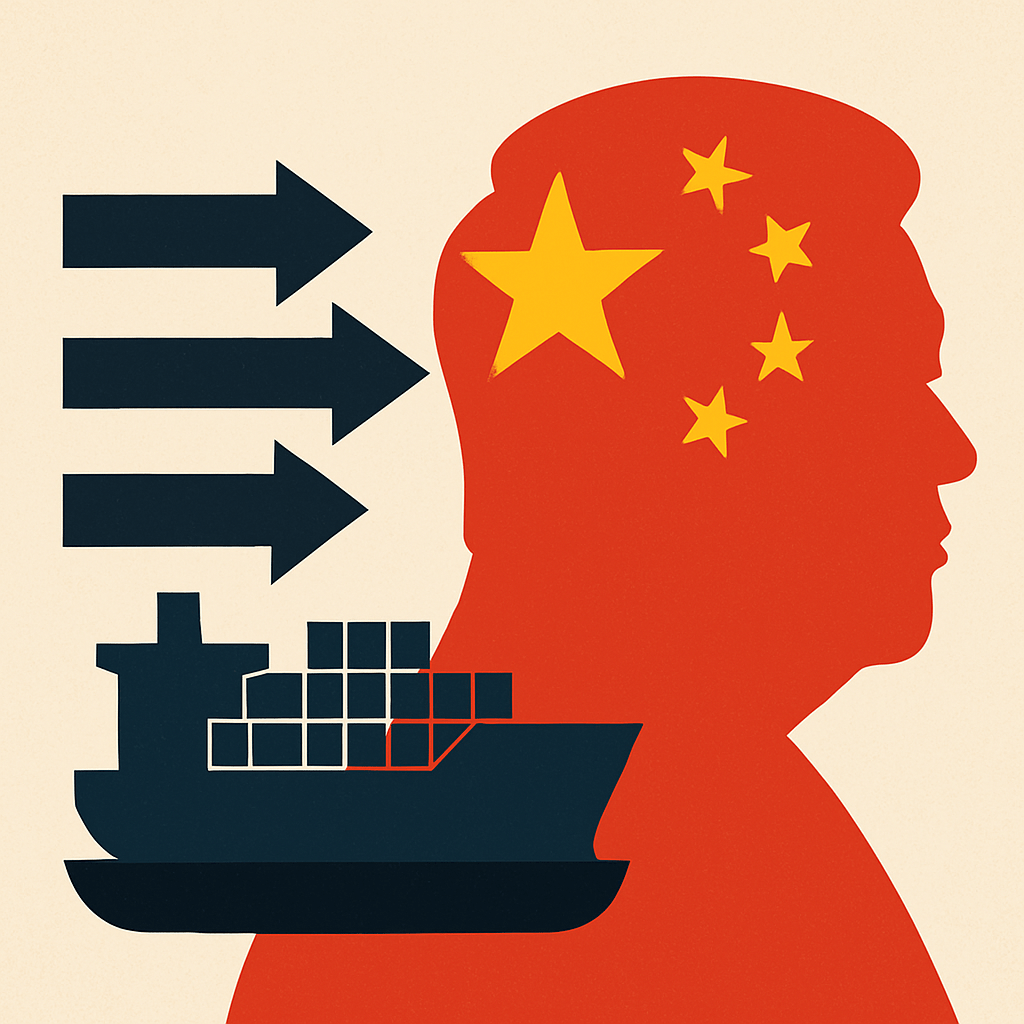
No other word has dominated the economic news more than ‘tariffs’ since the start of this year. Through his chaotic salvos of “more, less” and “on, off” American President Donald Trump has introduced a level of uncertainty into the international community that is increasingly hindering economic activity and investment, including in his own United States. Unfortunately, an end to this trade war mongering with its escalating cycle of action and reaction is not really in sight.
Trade Barrier Index
But what exactly are we talking about when we discuss tariffs on trade flows of goods and services and other barriers to international trade? The recently published International Trade Barrier Index 2025 published by The Economist provides valuable insights into tariffs and various non-tariff barriers to trade, such as specific administrative procedures to complicate international trade transactions. The meticulously assembled data were brought together in one overall index (TBI = Trade Barrier Index) reflecting the degree to which the 122 countries investigated are impeding the free international flow of goods and services. Each country is allocated an overall score between 0 (no trade barriers whatsoever) and 10 (a fully closed economy).
The overall TBI score increased from 3.95 in 2023 to 4.22 in 2025 but the data for the TBI 2025 were compiled prior to Trump’s announcements of tariffs. The entity with the lowest TBI score is Hong Kong (3.5) followed by Singapore (3.7) and Israel, Japan, Canada and New Zealand (all at 3.9). The Netherlands (4.2) also ranks among the countries with the lowest trade barriers in the world. Germany gets a 4.4 score while France and Belgium received a 4.8 TBI quotation. The US ended right in the middle of the group of 122 countries with a 5.2 TBI score (that is, I repeat, before Trump, whose actions will certainly considerably increase the US’s TBI score because the US is increasing tariffs on everybody else and other countries are until now only reacting, if they do at all, on Trump’s actions). At the top end of TBI ranking a lot of emerging market countries are grouping together. Indonesia and Russia have the highest score of 7.5, followed by India (7.2) and Venezuela and Thailand (7.1), Vietnam (6.9) and the Philippines and Zimbabwe (6.8).
Coming in at the ninth place when starting from the countries with the highest TBI’s is China with a 6.7 score. Compared to for example the score of the US (5.2) this means that China has 30% more overall trade barriers than the United States. Since China clearly intends to retaliate against Trump’s tariffs, its TBI score will increase but less than the US TBI because at this point in time China is apparently not rising trade barriers against other countries. By consistently retaliating against American actions the bilateral trade barriers between the two powers will remain basically unchanged.
Compared to other major industrial countries such as for example Japan and Germany China has trade barriers, both tariff and non-tariff, that are 70% and 50% higher, respectively. These numbers clearly show that China is much more protectionist than the major Western economic powers, and despite its rhetoric to the contrary, shows no intention of changing this situation.
“China is much more protectionist than the major Western economic powers”
The Protection + Subsidies Machine
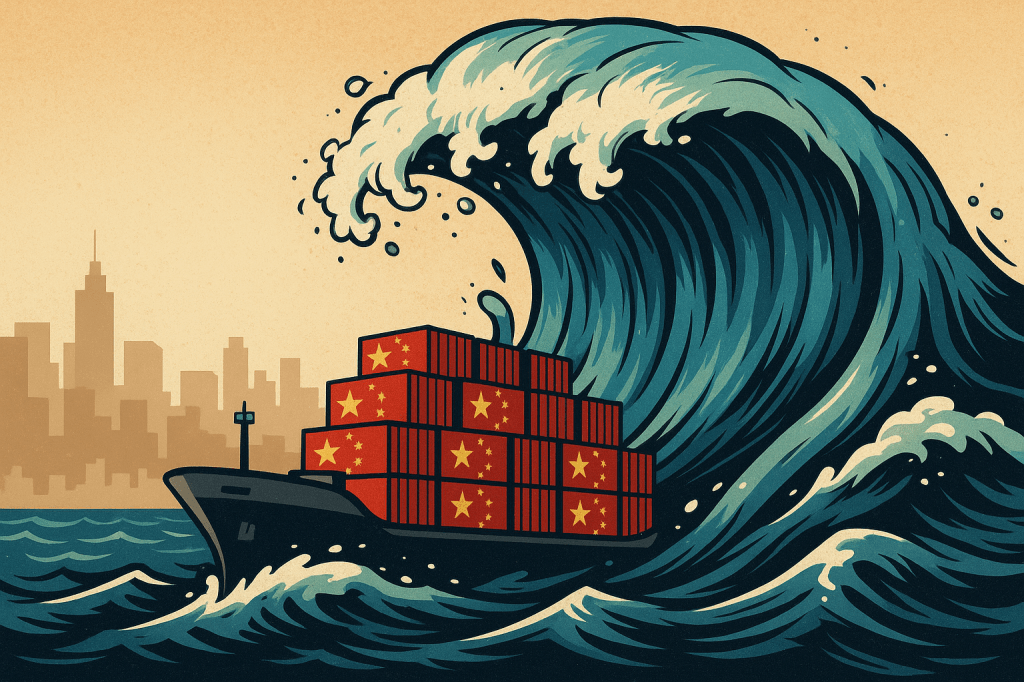
The way in which China has built a protectionist wall around its economy has already been analyzed extensively (see for example here and here). The data compiled by The Economist for their TBI index amply show that China has erected significant tariff and non-tariff barriers to keep international competitors out. In combination with massive subsidies provided to selected sectors of the economy (documented here) the Chinese model fosters unique circumstances for the development of substantial competitive advantages. The electric vehicle sector with its extensive supply chain (batteries, for example) is a prime example of how this Chinese model works out in practice. The tsunami of cheap Chinese imports in Western countries’ shopping scenes is a more general manifestation of China’s insidious industrial and export strategy. Behind an almost hermetic protection wall for its internal market and aided by state subsidies Chinese manufacturers can develop their activities, test their products out in the shielded Chinese market, improve on their quality, optimize production organization and take full advantage of the economies of scale of the huge Chinese market. Subsequently, they enter the Western and emerging world’s lucrative export markets, where prices are unattainable for non-Chinese competitors. Evidently there is no level playing field as far the competitive circumstances are concerned. Protectionism plus state subsidies are the basis of the Chinese industrial model which makes a joke out of the rules of the open international trade order that the Western world created and consolidated under American leadership in the decades after the Second World War.
“ The tsunami of cheap Chinese imports in Western countries’ shopping scenes is a more general manifestation of China’s insidious industrial and export strategy”
So, when in March of this year, Western executives gathered in Beijing for the China Development Forum and Chinese Premier Li Qiang urged them to “resist protectionism” and defend globalization, that sounded like a really weird, even absurd message. Chinese President Xi Jinping has recently repeated the same message and presented China, given everything president Trump is doing, as the most dedicated defender of the open international trade order. Given the degree of protectionism and state subsidization practiced by China and the fact that the country is not showing any real action on reducing its substantial barriers to open trade, these words and promises of Li and Xi lack even minimal credibility. Even more, they hide what is China’s real intention and that has nothing to do with a fair international trade order.
There can be no misunderstanding: China is not out to protect the open international trade system of the past decades that, by the way, has allowed the country to grow and develop at breath-taking speed. China wants to be the deciding party in a world order that first and second serves China‘s own national interests. If permitted, China will multiply the strategy applied in the electric vehicle sector. As a matter of fact, China is already applying the same formula of high protection and massive subsidies in many other sectors of the economy. If China presents itself as the main defender of the open international trade that means, in reality, that it will rigorously defend the present order insofar as it allows China to gain a dominant position in as many sectors of the economy as possible. One of the many unfortunate side effects of Trump’s trade war initiatives is that that they draw attention away from the dominant role China plays and firmly intends to continue to play as the main disruptor of the open international trade system. Sure, the American president shows a lot of aggressiveness towards China, but equally so towards allies like the European Union, Japan and Canada, all countries that have (much) lower trade barriers than the even pre-Trump USA had (see above). As already amply argued, the Trump Administration’s focus on bilateral trade balances makes absolutely no economic sense at all, least of all for the US itself.
“China wants to be the deciding party in a world order that first and second serves China‘s own national interests”
Joined forces
It would make much more sense if the US joined forces with those allies and tried to stop the devastating impact of the Chinese strategy manifestly focused on undermining the leadership and future development of Western world companies in vital sectors of the economy. It is hard to doubt the fact that this industrial and economic strategy is part of a long-term geopolitical strategy of China aimed at discrediting and displacing Western democracies. Defense of the open international trade order that has brought advancement and welfare to billions of people requires firm action against China’s new form of economic and political imperialism. Talking about tariffs in that context would make a lot of sense.
Last but not least we should take into account when navigating this complex international landscape that in the United States there will be a post-Trump era. It is not entirely unreasonable to expect that period to be less chaotic and less adversarial towards long-term allies than what we experience today. In China on the contrary there is no real challenge to the political hegemony of the Communist Party (although we should not forget that with respect to such dictatorial systems history has delivered already more than one Big Surprise). As far as the eye can see China will remain the Great Disruptor of the international (trade) order.

