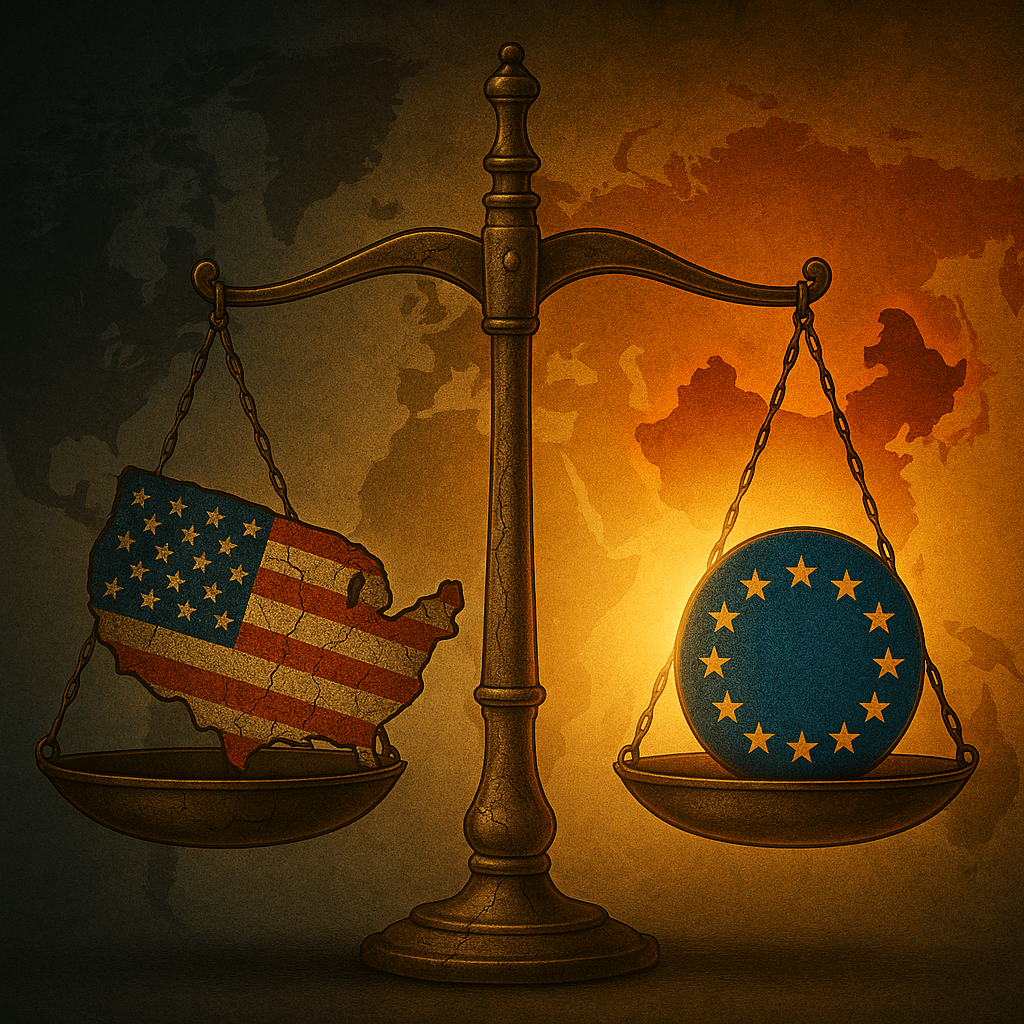
What will come after the era of outspoken American dominance across the globe? Nobody knows, but the message for Europe is clear. Simplify your politics and raise the growth potential of your economies. It will certainly be a hell of a job, but only then will we be able to save our democracy and our way of life.
“Oh, and one more thing: you aren’t going to like what comes after America“
In a recent commentary, the celebrated British historian Timothy Garton Ash refers to a poem written by the late Leonard Cohen (1934–2016). In the poem, the Canadian poet and singer criticises the American establishment for, among other things, having ‘no understanding of the consequences of what you do’. However, instead of delivering a vitriolic coup de grâce to the American elite at the end of his poem, Cohen offers a clear warning: ‘Oh, and one more thing: you aren’t going to like what comes after America’.
“A golden age for those living within the international liberal order”
At a time when we are faced with a world in profound turmoil and a United States led by a president who seems intent on destroying everything that came before him, Leonard Cohen’s wise concluding words deserve our full attention. Will we dislike the world that comes after American dominance, as Cohen warned? It is impossible to formulate a clear yes or no answer to this question at this point. However, it can be persuasively argued that the decades of American hegemony brought unprecedented increases in the welfare of countries that were part of the international liberal order created and defended by the United States. This order was, and to a diminishing extent still is, characterised by political democracy, individual freedom, the rule of law, socially responsible capitalism, and a relatively peaceful environment (at least by historical standards). It is not an exaggeration to speak of a golden age for those living within that international liberal order.
Yes, of course, as also implied by Cohen’s poem, the United States committed gross errors and misdeeds during its hegemonic period. Think of Vietnam, think of Iraq and Afghanistan, think of ongoing internal problems like racism, inner city violence and the drug plague. But the overall judgement on this era of American dominance cannot but be positive, for the US itself as well as for the countries in the American orbit, the so-called Western world. China, the former Soviet Union, and the satellite states of these two major powers were not part of the American-led liberal order during the half-century after the Second World War, and did not enjoy the progress and prosperity experienced by the West.
Masks Off
Even without considering the damage caused by President Donald Trump during his first 100 days in office, it is fair to say that the United States’ position as the world’s leading political, economic and military power has come under increasing pressure. Former French Minister of Foreign Affairs Hubert Védrine was absolutely right when, at the turn of the 21st century, he defined the US as a “hyperpuissance”, the absolute leader in different aspects of world affairs. Two and a half decades later, however, this label can no longer be applied.
In less than half a century, China has developed into a robust competitor of the United States. China achieved this feat by taking full advantage of the open economic order that the United States primarily defends. It is now abundantly clear that the communist leadership in Beijing misled the US and the West in general about its true intentions. China never intended to become part of the American-led liberal order. It took full advantage of the Western world’s openness and enthusiasm – some would say its naivety – to build up its economic and military strength.
“Machiavellianism is alive and well in Beijing“
Under president Xi Jinping, the masks fell off and China started to openly challenge the American-led world. Beijing no longer hides its contempt for democracy and Western values. China wants to lead a world ruled by autocracy and state domination. This explains why Beijing supports Putin’s Russia and the theocracy in Tehran, but these two dictatorships should not be under any illusion. Despite all the rhetoric to the contrary, China’s support for these regimes will only last as long as they serve China’s interests and objectives. Machiavellianism is alive and well in Beijing. We will of course have to deal and trade with the Chinese, but we must do so with the utmost prudence. We cannot trust the current Chinese establishment to be a reliable partner.
For the leadership in Beijing, the second presidency of Donald Trump is a gift from heaven for at least three reasons.
Firstly, Trump is alienating his historic allies day by day. Canada and the European Union in particular are treated with utter contempt. This creates new opportunities for Beijing to reshape the world’s geopolitical and geo-military landscape. Secondly, while the rest of the world finds it hard to view Washington as a trustworthy ally and leader due to Trump’s volatility, unpredictability and periodic nastiness, China can present itself as a reliable partner. Thirdly, the Trump trade war and the massive uncertainty created by continuously changing policy positions in the most contradictory ways will result in recession and inflation. The public anger that ensues is much more explosive in democracies like the US than in tightly controlled dictatorships like China.
Go for home runs
As previously mentioned, it is impossible to predict the outcome of the current turmoil in the international geopolitical environment or the position that the EU will occupy in the new landscape. Will we transition from a unipolar world led by the US to a unipolar world led by China? Or will we end up in a multipolar world, where several powerful blocs (the US, China, India and the EU, for example) are in constant rivalry with one another? Or will the world simply descend into continuous disorder, as has often been the case historically when an existing order has collapsed or disappeared? One thing is certain, however: the next era of broader geopolitical relations will be characterised by massive uncertainty, changing partnerships and increased risk of conflict. Some of these conflicts will inevitably be military.
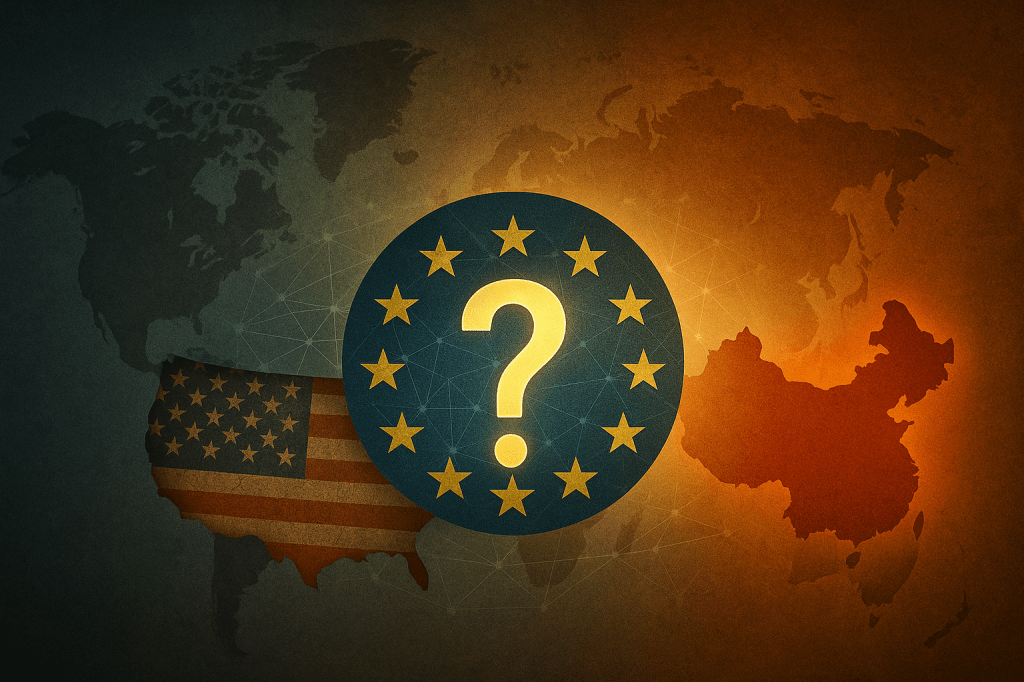
What will this mean for the European Union and its member states? This is a difficult question to answer, given the volatility and uncertainty that characterise the current policy environment. However, further reflection reveals that we must transcend the turbulent international environment, since issues such as limiting the unpredictability of the Trump administration or reconfiguring Beijing’s intentions are beyond Europe’s reach. The European Union and its member states should focus on policy areas that fall clearly within their zone of decision-making power and that are highly relevant to enabling the EU and its member states to face the uncertain future with strength and confidence.
“Clearer distinctions between what the EU can and should do, and what is better left to the member states.”
In this context, two major lines of thought emerge.
Firstly, the EU should streamline its political processes to make them less complex. Careful consideration of decision-making rules such as the unanimity rule is required. Streamlining and upgrading the EU’s decision-making power also requires clearer distinctions to be drawn between what the EU can and should do, and what is better left to the member states. Social, educational and tax policies should remain the responsibility of the member states. The subsidiarity principle should remain a key priority.
The EU should play an important role in defence production and organisation, competition policy (including state aid rules), banking and financial supervision, agricultural support policies, and developing the general framework for industrial policies. Further refinements to such schemes should obviously be discussed within the European Council and between the European Council and the European Parliament. If there is a consensus on allocating more resources to the EU budget, increasing the GNI contribution of member states remains the most transparent and equitable source of funding.
The second objective of European attention should be to improve its economic growth potential. In recent years, Europe has been a consistent underperformer in terms of economic growth. In order to manage its rising debt and deal with the new challenges that are inevitably on the horizon, higher economic growth is absolutely necessary. Several major initiatives could enhance our growth potential, regardless of the challenges we face on the international stage. Of the many ways in which we can raise growth potential, three priorities stand out.
First, we should consolidate the internal market and eliminate the many intra-EU obstacles to open and fair trade and investment conditions within the EU. Secondly, we must intensify our efforts to realise the Capital Markets Union. Currently, the focus is on the Savings and Investment Union, but this is essentially the same as the more familiar concept of the CMU. Thirdly, a structural overhaul of regulatory regimes, which often hinder economic growth, is absolutely necessary. The new von der Leyen European Commission promised to do this, but has been slow to show concrete plans and actions.
Whether or not we will like what comes after America, as Leonard Cohen warned, depends very largely on what we will do ourselves. No more excuses.
 Johan Van Overtveldt