All the international agendas are currently headed by the war in Ukraine. After the spectacular falling-out between the presidents Trump and Zelensky, and the American decision to halt military support for Ukraine, the European Union has to rise to the occasion and show leadership. A real uphill battle, not least because the ultimate goals of the American president may lie far beyond Ukraine.

“It is unclear what exactly Trump wants to achieve in his negotiations with Putin, but he wants to achieve something very big, and he wants to achieve it fast, very fast. What Trump offers Putin is not simply the prospect of ending the war in Ukraine on terms broadly favorable to Moscow, but a grand bargain to reorder the world. This includes America’s presence in Europe, and also in the Middle East and the Arctic. Trump promises Putin that Russia will be rapidly integrated into the global economy and that Moscow will regain the status of a great power that it lost in the humiliating 1990s. Trump hopes that this will convince Russia to sunder its alliance with China. The US refusal in a UN vote to condemn Russia’s aggression in Ukraine shocked even some of the president’s most devoted admirers. But it was meant to persuade the Kremlin that the American leader is ready to do the unthinkable – and reconfigure the world as shaped by Ronald Reagan and Gorbachev in the late 1980s”, so Ivan Krastev recently wrote in the Financial Times.
Ivan Krastev is a Bulgarian political scientist who chairs the Centre for Liberal Strategies in Sofia. Krastev is also a fellow at the Institute for Human Sciences in Vienna and a member of the European Council on Foreign Relations. Krastev authored two most remarkable books on Europe. In After Europe (2017) he brilliantly analyzed the political destabilization sparked by the flow of migrants into Europe, the spread of extreme right-wing populism and … the threat posed by Vladimir Putin’s Russia to the rest of the European continent. In 2019, Ivan Krastev published together with New York University’s Stephen Holmes The Light That Failed. A Reckoning. In this book, Krastev and Holmes tried to explain where it went wrong with the eastward spread in Europe of liberal democracy. They pointed out that Trump’s success in the United States – remember: the book came out in 2019 – elevated Putin’s Russia and Orban’s Hungary into models for the United States. Well …
“Krastev and Holmes tried to explain where it went wrong with the eastward spread in Europe of liberal democracy.”
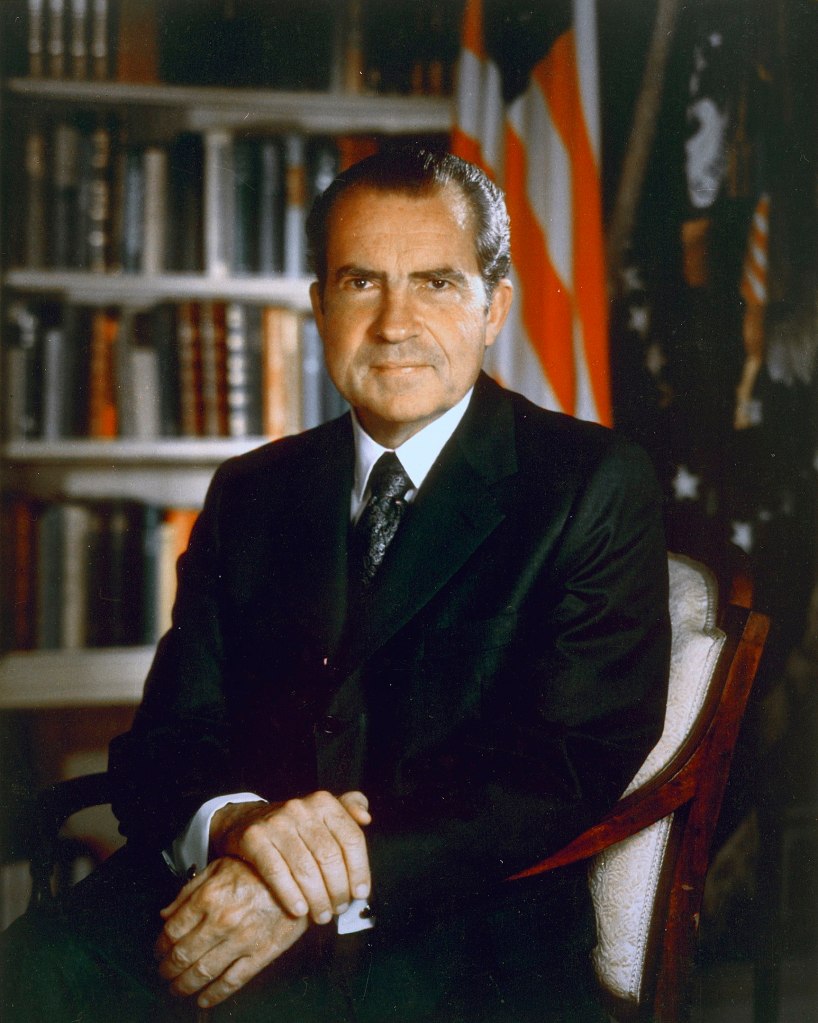
A Reverse Nixon
The opening quote of this blog shines a light on the extremely volatile international political (and military) situation we find ourselves in at this moment. As The Economist recently put it, rather bluntly albeit difficult to argue against, we’re living “Europe’s worst nightmare … The old world needs a crash-course on how to wield hard power in a lawless era, or it will fall victim to the new world disorder”.
Krastev suggests that there is a grand bargain behind the many different ways in which President Donald Trump and his administration talk and behave. Trump, so also other analysts have already pointed out, is attempting a “reverse Nixon”. In the early 1970s American president Richard Nixon opened up to Mao’s China in order to put pressure on the Soviet Union, at that time the main antagonist for the US. Is it arguable that Trump is cozying up to Russia to put additional pressure on China, the country that is most certainly today’s main antagonist for the United States and Russia’s major partner in crime. Historical situations can never be compared literally. A major difference between the Nixon era and the Trump era is that while the economic ties between the US and the Soviet Union were minimal, between the present US and China they are manifold. But nevertheless the “reverse Nixon” image is a helpful metaphor for the current geopolitical turmoil.
It is hard to tell whether such a grand bargain to reset the balance among the US-Russia-China trio is really Trump’s ultimate objective (if any fixed strategic objective can be taken for granted in Trump’s world). From an American perspective, an argument can be made that such a strategic objective may have some merit. If the Trump clan really believes Europe is lost due to policies drenched in climate obsession and woke-ism, then teaming up with Russia to fight off Chinese dominance makes sense. Throw in lucrative profit opportunities the Trump circle detects in the ravaged Russian economy and policies aimed at charming the Russian autocrat make even more sense. But what about Putin’s response to these global political struggles?
“If the Trump clan really believes Europe is lost due to policies drenched in climate obsession and woke-ism, then teaming up with Russia to fight off Chinese dominance makes sense.”
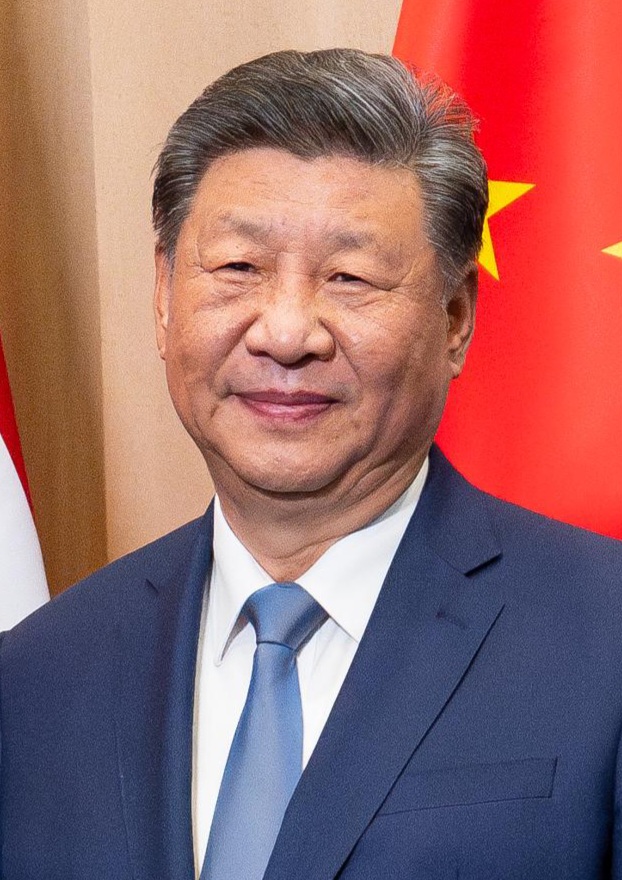
On the one hand, some unease about the mounting dependence of Russia on China must run through the Kremlin corridors by now. The recent rather drastic reorientation towards China has been more out of bare necessity than a deliberate policy choice. There have been indications that parts of the Russian elite do not like at all the reversal of traditional power relationship between Moscow and Beijing. Despite his collegiate behavior towards China’s strongman Xi Jinping, Putin must by now acknowledge what The Economist already pronounced during the first days of Russia’s invasion into Ukraine:
“No matter how the war unfolds, China will treat its relationship with the Kremlin as a means to boosting Chinese power, not Russia’s”. Donald Trump’s present overtures might have more than some temporary attractiveness to Putin considering the above.
On the other hand, Vladimir Putin’s resentment, if not to use a stronger word, towards the Western political and economic order is really deep-seated. Putin has never accepted the implosion of the Soviet Union and the subsequent decline of Moscow’s international impact, both of which he fully blames on Western actions. On several occasions he said loudly that Russia wants to be an exporter of chaos to the world, aiming at the downfall of the post-WW II Western order. His alignment with rogue states like Iran and North Korea is readily apparent. Long gone are the words Vladimir Putin spoke on a visit to London in February 2000: “Russia is part of the European culture … And I cannot imagine my country in isolation from Europe and what we often call the civilized world. So, it is hard for me to visualize NATO as the enemy”. Furthermore, it can be taken for granted that Putin is well aware of not only Trump’s impulsiveness and volatility (cfr his sudden threat of new sanctions for Russia or revisiting of trade agreements struck under… his 2016 presidency) but also of the fact that there will always be a post-Trump reality in the US.
Stand our ground
Which of these two basic sentiments circulating in Putin’s Kremlin gains the upper hand is impossible to predict, even for Donald Trump. The one thing that stands out in terms of Putin’s behavior and actions is his complete untrustworthiness. At least since his invasion in Georgia in August 2008, Putin has constantly lied and misinformed about his intentions and actions. It would be extremely naïve to assume that a veil of honesty would now descend upon the Russian president. What of this moment might seem to be an attractive grand bargain for the Trump administration can just as suddenly and just as easily turn into a failed bargain. Such a failure would be of historic proportions, with huge consequences for the world, not least in Europe. It would be enormously risky to count on the durability of anything Putin agrees to, even when it is written on paper and duly signed by all parties involved.
“ What of this moment might seem to be an attractive grand bargain for the Trump administration can just as suddenly and just as easily turn into a failed bargain.”
For Europe and the European Union, the possibility of the American president contemplating such a grand bargain makes an already very complicated situation even more worrisome. Our focus must shift towards hard power in a world where soft power has become basically irrelevant, if not even a source of ridicule. It is highly desirable in this context for the EU to show unity, preferably in harmony with the UK. The build-up of military industrial capacity of our own is an imperative. A major mobilization of private investment and financing must be incentivized, by the EU and by individual member states also in harmony. Additional spending of at least 200 billion euro annually is needed for the EU to achieve significant hard power.
Complicating things further is that a good structural relationship with the United States is also very much in Europe’s interests. In an era where the US, whether under Trump or somebody else (remember Obama’s pivot to Asia), will no longer be Europe’s foremost partner on the world scene, economic, political and military ties will remain. The NATO alliance’s nature will undoubtedly change – as a matter of fact: has already changed – but remains most valuable and desirable Europe.
The EU not only has to show unity but also firm determination to stand by the principles of democracy, freedom, sovereignty and progress. Most importantly: to pursue thoughtfully the policies necessary to achieve these goals. And to make it all even more challenging we need to do it all in a crash course way.
 Johan Van Overtveldt