Only two months into 2025, stating that American president Donald Trump has caught everybody’s attention may be the understatement of the year.
His flirtation with everything crypto is one of the most eye- and attention-catching moves. Does the president fully realize the manifest risk to financial stability represented by the present Crypto Craze?
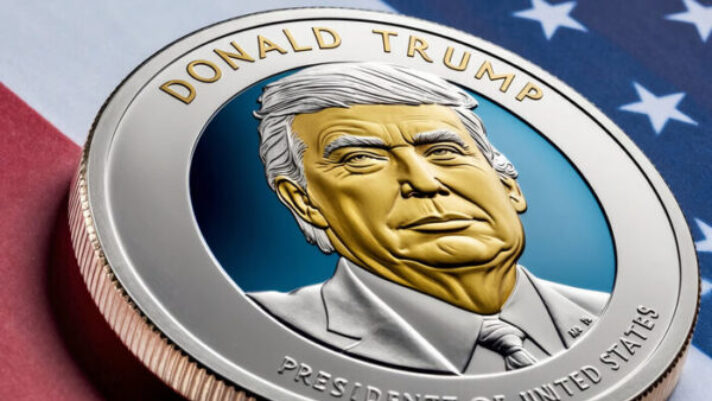
And burst it will
“The crypto bubble risks becoming the match that starts the fire of the next financial crisis”, a senior Fed official recently told me. The comparison with the role of subprime mortgages in igniting the Great Financial Crisis of 2008 is straightforward. Both the subprime market previously and the crypto world today are only a small, even tiny, part of the worldwide financial markets. But both markets were and are so gripped by speculative frenzy that when the bubble bursts – and burst they both will – fear and uncertainty may spread. This can rapidly lead to wildfires in other, much more important, financial markets. In the current tense financial and geopolitical situation, there are few certainties as to what all this mayhem might lead to.
“The crypto bubble risks becoming the match that starts the fire of the next financial crisis“
The role played by American president Donald Trump in the development of the “Crypto Craze” is there for everybody to see. He promised to end “the persecution of the crypto industry” and to make the United States into “the Bitcoin superpower of the world”. Together with his sons and several of his longtime business partners, he last year backed the crypto platform called World Financial Liberty. Immediately after his inauguration he and first lady Melania Trump both shamelessly launched their own meme coins ($TRUMP and $MELANIA), purely speculative cryptocurrencies with no underlying business model and zero cash flow. Both meme coins were launched with the sole intention of enriching the initiators, i.e. the president and his wife. $TRUMP surged almost immediately to a value of $14.5 billion and $MELANIA to almost $3 billion (losing a substantial amount of value thereafter). It is hard to disagree with Maxine Waters, Democratic Congresswoman and member of the US House Financial Services Committee: “Trump has created a way to circumvent national security and anti-corruption laws, allowing interested parties to anonymously transfer money to him and his inner circle”.
Adepts
Several of Trump’s top nominations and appointments are crypto adepts. Secretary of the Treasury Scott Bissent held shares in several Bitcoin investment funds and declared that “crypto is about freedom and the crypto economy is here to stay”. An even more vocal supporter of Bitcoin and cryptos in general is Howard Lutnick, Trump’s Secretary of Commerce. The same goes for David Sacks, the newly appointed White House artificial intelligence and crypto czar, and past investor in several crypto firms. Steve Witkoff, Trump’s Middle East envoy, founded World Financial Liberty, the crypto forum referred to above. Vice president JD Vance held substantial crypto investments. Needless to add, Elon Musk, Trump’s main buddy (for the time being at least), is deep into everything crypto.
The major player in the new crypto world in the US will most probably be Paul Atkins. Atkins is Trump’s choice to lead the powerful Securities and Exchange Commission (SEC), a heavyweight financial regulator. Prior to his nomination, Atkins was active in the crypto investment and consultancy world. He has already announced a much more deregulatory approach towards the crypto world. Atkins’ forerunner, Gary Gensler, took a more restrictive attitude and launched a slew of lawsuits against big-name crypto companies. Nevertheless, Gensler’s SEC approved the launch of spot Bitcoin and some crypto exchange traded funds.
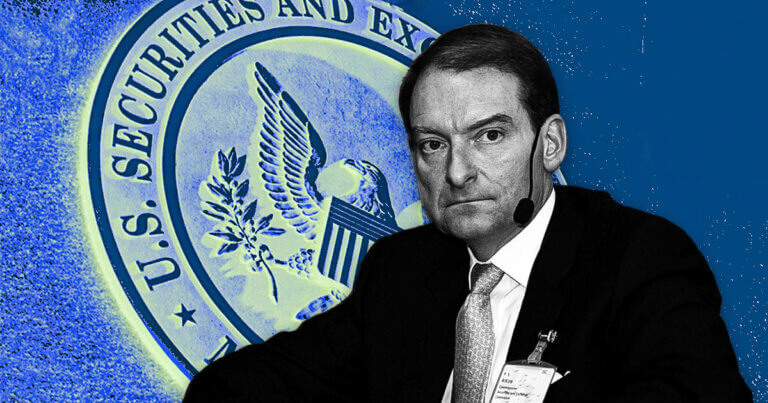
Paul Atkins
Donald Trump has advanced crypto ambitions beyond personal enrichment. He has launched the proposal to create an official US Bitcoin reserve. Such an action would mean nothing more or less than the creation of an alternative to … the dollar. It is quite incomprehensible that the American president himself would support such an initiative. The United States has enjoyed and continues to enjoy immense advantages from the dollar’s status as the prime worldwide reserve currency. Making the US “the Bitcoin superpower of the world” does not really sound like a real step forward for the US in its struggle to remain the leading financial power in the world.
What’s the problem?.
Why is all this presidential attention for the crypto world a real problem? Basically for two reasons.
First, cryptos do not have an intrinsic value, they are not linked to real, tangible assets. A mortgage loan is linked to real estate value, a corporate loan to a cash flow, a car loan to the value of a car, a student loan to the future earnings of the student, and so on. There is no comparable asset in the crypto world (the underlying blockchain technology is certainly valuable). Hence, the basically speculative nature of these quasi-assets and hence also the danger of extreme investor reactions in moments of tension and panic.
Secondly, law enforcement information suggests that a majority of the transactions on crypto exchanges are linked to the criminal (under)world. There is an urgent need for the authorities to be able to have at least control over the exchange of cryptos into “normal” currencies like the dollar and the euro.
I fully agree with the argument made recently in the Financial Times by Eswar Prasad. Prasad is professor at Cornell University, senior fellow at Brookings Institution and author of the brilliant book The Future of Money: “The mainstreaming of crypto and the benign attitude of regulators will also spur closer connections between the industry and the traditional financial institutions such as commercial banks and investment management firms. These connections will expose the conventional financial system to risk spillovers”.

Eswar Prasad
Major commercial banks, investment funds and pension funds have already caught a dose of FOMO (Fear of Missing Out) and invested heavily into cryptos. Just as it transpired with subprime mortgages, everybody will wonder who is losing a lot of money when the crypto bubble bursts. And, as already noted, this bubble will also burst someday.
 Johan Van Overtveldt